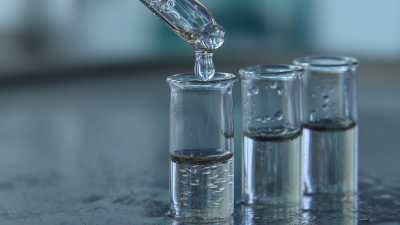
The exploration of amides in modern chemistry highlights their versatility and significance across various industries, with a particular emphasis on specialty chemicals.
 SHANGHAI QIXUAN CHEMTECH CO., LTD. specializes in the production of fatty amines and amine derivatives, which play a crucial role in formulating innovative cationic and nonionic surfactants, as well as polyurethane catalysts.
According to recent industry reports, the global amide market is projected to reach approximately $3 billion by 2025, driven by increasing demand in the agrochemical, oil field, and personal care sectors.
The unique properties of amides, such as their ability to enhance surface activity and facilitate chemical reactions, make them essential components in various applications.
As we delve into the multifaceted applications of amides, understanding their role and impact will be paramount for advancing both chemical processes and industrial productivity.
SHANGHAI QIXUAN CHEMTECH CO., LTD. specializes in the production of fatty amines and amine derivatives, which play a crucial role in formulating innovative cationic and nonionic surfactants, as well as polyurethane catalysts.
According to recent industry reports, the global amide market is projected to reach approximately $3 billion by 2025, driven by increasing demand in the agrochemical, oil field, and personal care sectors.
The unique properties of amides, such as their ability to enhance surface activity and facilitate chemical reactions, make them essential components in various applications.
As we delve into the multifaceted applications of amides, understanding their role and impact will be paramount for advancing both chemical processes and industrial productivity.
Understanding the Structure and Properties of Amides in Chemical Reactions
Amides, characterized by the functional group –C(O)NR2, have garnered significant attention in modern chemistry due to their unique structure and properties. The carbonyl carbon in amides is strategically hybridized, making them less electrophilic compared to other carbonyl-containing compounds. This reduced electrophilicity allows amides to participate in a variety of chemical reactions, including nucleophilic substitutions and hydrolysis, without the reactivity issues often associated with other amine and acid derivatives. Moreover, the resonance stabilization provided by the adjacent nitrogen atom contributes to the overall stability of the amide bond, influencing both its physical and chemical properties.
The ability of amides to engage in hydrogen bonding significantly enhances their solubility and interaction with solvents, which is vital for their applications in pharmaceuticals and agrochemicals. This property also plays a crucial role in the development of polymeric materials, where amide linkages contribute to the mechanical strength and thermal stability of the compound. Understanding the structural nuances of amides allows chemists to design molecules with tailored activities for specific applications, paving the way for innovative solutions in various industrial sectors, from drug formulation to material sciences.
Synthesis Techniques: How to Efficiently Produce Amides in the Lab
Amides are a fundamental class of compounds in modern chemistry, known for their versatility and broad applications ranging from pharmaceuticals to agrochemicals. Their synthesis is crucial for both laboratory research and industrial processes. Efficient methods for producing amides typically involve the reaction between carboxylic acids and amines, but various techniques can enhance yield and selectivity.
One effective approach to synthesize amides is through coupling agents like DCC (dicyclohexylcarbodiimide), which facilitates the formation of the amide bond while minimizing side reactions. It’s essential to optimize reaction conditions, such as temperature and solvent choice, to achieve the desired product. Additionally, microwave-assisted synthesis has gained popularity for its ability to significantly reduce reaction times and improve outcomes.
Tips: When performing amide synthesis, always consider the purity of your starting materials. Impurities can dramatically affect reaction efficiency. Also, employing protective groups for sensitive functional groups can prevent unwanted side reactions and enhance product stability. Lastly, utilizing analytical techniques such as NMR or HPLC can help monitor the reaction progress, ensuring you achieve the highest possible yield.

Exploring the Role of Amides in Pharmaceutical Development and Drug Design
Amides play a crucial role in pharmaceutical development and drug design, primarily due to their unique structural and chemical properties. These compounds, which feature a carbonyl group attached to a nitrogen atom, are known for their stability and ability to participate in various chemical reactions. This stability makes amides an attractive choice for drug candidates, as they often exhibit enhanced metabolic stability compared to other functional groups. Consequently, this stability can lead to a longer lifespan of the drug in the body, allowing for improved therapeutic outcomes.
Furthermore, amides can serve as versatile building blocks in the synthesis of diverse pharmaceuticals. They can be modified to fine-tune biological activity, optimize drug-receptor interactions, and improve solubility profiles. In drug design, researchers leverage the ability to create amide linkages to enhance potency and selectivity toward specific biological targets. By strategically incorporating amides into drug molecules, chemists can tailor their properties, leading to innovative therapies for various diseases, including cancer and neurological disorders. The ongoing exploration of amides in drug design continues to unlock new possibilities within the pharmaceutical industry, emphasizing their importance in modern medicinal chemistry.
Industrial Applications: How Amides Enhance Performance in Various Products
Amides play a crucial role in a myriad of industrial applications due to their unique chemical properties and versatility. They are integral components in the production of a wide range of products, including pharmaceuticals, agrochemicals, and polymers. For instance, in the pharmaceutical industry, amides are often used as intermediates in the synthesis of active pharmaceutical ingredients (APIs), enhancing their bioactivity and stability. Their structural attributes contribute to improved solubility and permeability, which are essential for drug efficacy.
In addition to pharmaceuticals, amides are pivotal in the formulation of agrochemicals, where they enhance the performance of pesticides and herbicides. By modifying the activity of active ingredients, amides can increase the effectiveness and duration of these products in the field, leading to better crop yields and reduced environmental impact. Moreover, in the polymer industry, amides serve as key additives that improve the thermal and mechanical properties of plastics, contributing to the development of materials with superior strength and durability. Thus, the diverse applications of amides not only enhance product performance but also drive innovation across various sectors.
Industrial Applications of Amides in Modern Chemistry
Green Chemistry Approaches: Sustainable Methods for Amide Synthesis
The importance of amides in modern chemistry and industrial applications is underscored by their diverse functionalities, ranging from pharmaceuticals to agricultural chemicals. However, the traditional synthesis of amides often involves harsh chemical processes that raise environmental concerns. As a response, green chemistry approaches are increasingly becoming the focus of research and development, offering sustainable alternatives for amide synthesis. According to a 2022 report by the American Chemical Society, sustainable methods not only reduce waste and energy consumption but can also enhance product yields by 30% compared to conventional techniques.

One notable strategy revolves around the use of renewable resources, such as biomass-derived feedstocks. Utilizing bio-based substrates for amide formation can significantly lower the carbon footprint of production processes. A comprehensive analysis published in the Journal of Cleaner Production highlights that transitioning to greener synthesis methods has the potential to reduce greenhouse gas emissions associated with amide production by up to 50%. Moreover, advancements in catalytic technology, particularly biomimetic catalysts, are paving the way for more efficient and environmentally friendly synthesis pathways, which aligns with global sustainability goals in the chemical industry. These innovations not only contribute to economic viability but also adhere to the principles of green chemistry, promoting a safer and more sustainable future for chemical manufacturing.
Future Trends: Innovations and Challenges in Amide Research and Utilization
Amides are increasingly recognized as key components in various innovative applications within modern chemistry and industry. Their versatility extends beyond traditional uses, opening new avenues for research and practical implementation. As we delve into the future of amide utilization, we can draw parallels with advancements in related fields, such as hydrogen production and sustainable wastewater treatment. The efforts to develop hybrid hydrogen technologies not only enhance energy efficiency but also emphasize the importance of eco-friendly practices, much like the rising demand for amides in green chemistry.
Moreover, the integration of advanced materials and innovative techniques in drug delivery systems highlights the evolving landscape where amides could play a crucial role. As scientists tackle challenges like antibiotic resistance, the exploration of peptide-based therapeutics exemplifies the need for new solutions where amides can serve as building blocks or components. The future trends in amide research must address these challenges by developing efficient synthesis methods and exploring new functional properties that could further enhance their applicability across diverse sectors, including medicine, energy, and environmental sustainability.
Exploring the Versatile Applications of Amides in Modern Chemistry and Industry
| Application Area |
Amide Type |
Main Uses |
Future Trends |
Challenges |
| Pharmaceuticals |
Primary amides |
Active pharmaceutical ingredients (APIs) |
Increased synthesis efficiency |
Regulatory compliance |
| Agriculture |
Secondary amides |
Herbicides and pesticides |
Eco-friendly formulations |
Environmental impact assessments |
| Materials Science |
Tertiary amides |
Polymers and coatings |
Smart materials development |
Cost-effective synthesis |
| Food Industry |
Aromatic amides |
Flavor enhancers and preservatives |
Natural sourcing methods |
Consumer safety concerns |
| Cosmetics |
Fatty amides |
Emollients and surfactants |
Sustainable ingredient sourcing |
Ingredient transparency |
FAQS
: Amides are a fundamental class of compounds known for their versatility and broad applications, including pharmaceuticals and agrochemicals. Their synthesis is crucial for laboratory research and industrial processes.
Amides are usually synthesized through the reaction between carboxylic acids and amines. Various techniques, such as using coupling agents, can enhance yield and selectivity.
Coupling agents like DCC (dicyclohexylcarbodiimide) facilitate the formation of the amide bond while minimizing side reactions, leading to more efficient synthesis.
Techniques such as optimizing reaction conditions (temperature and solvent choice) and microwave-assisted synthesis can significantly reduce reaction times and improve outcomes.
Impurities in starting materials can dramatically affect reaction efficiency, leading to lower yields or unwanted side reactions.
Employing protective groups for sensitive functional groups can prevent unwanted side reactions and enhance product stability, leading to better yields.
Techniques such as NMR (Nuclear Magnetic Resonance) or HPLC (High-Performance Liquid Chromatography) are helpful for monitoring reaction progress and ensuring high yields.
Amides are crucial in pharmaceutical development due to their unique structural properties, stability, and ability to enhance metabolic longevity of drugs in the body.
Amides can be modified to fine-tune biological activity, optimize drug-receptor interactions, and improve solubility profiles, leading to more effective drug candidates.
The ongoing exploration of amides includes their use in developing innovative therapies for diseases such as cancer and neurological disorders, highlighting their importance in modern medicinal chemistry.
Conclusion
Amides are versatile compounds that play a critical role in modern chemistry and industry, serving as essential building blocks in various applications. This article explores their structure and properties, highlighting how they participate in vital chemical reactions. It delves into effective synthesis techniques for amides, emphasizing efficient laboratory methods. Furthermore, the significant role of amides in pharmaceutical development and drug design is examined, underscoring their importance in creating effective therapeutic agents.
The industrial applications of amides are vast, enhancing performance in products ranging from agrochemicals to surfactants. In line with sustainable practices, the article discusses green chemistry approaches for amide synthesis, focusing on environmentally friendly methods. Finally, it looks ahead to future trends in amide research, addressing innovations and challenges within the field. Overall, the multifaceted nature of amides underscores their indispensable value across various sectors, including those served by companies like SHANGHAI QIXUAN CHEMTECH CO., LTD., which specializes in related specialty chemicals.