

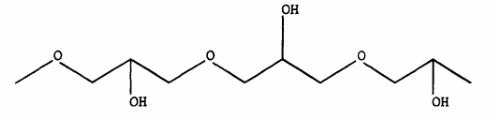
The structure of fatty amine polyglycerol ether surfactants is as follows: The hydrophilic group is also composed of hydroxyl groups and ether bonds, but the alternating occurrence of hydroxyl groups and ether bonds changes the situation of polyoxyethylene ether nonionic surfactants, which are dominated by ether bonds. After dissolving in water, in addition to forming weak hydrogen bonds through the oxygen atoms on the ether bonds with hydrogen atoms in water like the latter, they can also interact with water through hydroxyl groups. Therefore, fatty amine polyglycerol ether surfactants can achieve good water solubility with a smaller number of glycidol additions, so the hydrophilicity of fatty amine polyglycerol ether surfactants is significantly stronger than that of polyoxyethylene ether surfactants. In addition, fatty amine polyglycerol ether surfactants also have the structure of organic amines, making them have some characteristics of both nonionic and cationic surfacta nts: when the number of additions is small, they show the characteristics of cationic surfactants, such as acid resistance but not alkali resistance, and certain bactericidal properties; when the number of additions is large, the nonionic property increases, they no longer precipitate in alkaline solutions, the surface activity is not destroyed, the nonionic property increases, and the cationic property decreases, so the incompatibility with anionic surfactants is weakened, and the two can be mixed for use.
1.Used in the washing industry
Surfactants of fatty amine polyglycerol ether exhibit different properties with different addition numbers: when the addition number is small, they show the characteristics of cationic surfactants, which increases their solubility at low temperatures and gives them good detergency over a wide temperature range; when the addition number is large, the non-ionic property increases, so they no longer precipitate in alkaline solutions and their surface activity remains undamaged. Due to the increased non-ionic property and reduced cationic property, when compounded with anionic surfactants, they can significantly reduce surface tension and improve emulsifying and wetting abilities; similar to polyoxyethylene chains, their hydrophilicity and steric hindrance effect also have an obvious inhibitory effect on the precipitation or agglomeration of detergents. In addition, fatty amine polyglycerol ether has certain softening and antistatic properties, so when used in washing fabrics, it can solve the defect of poor hand feel after washing.
1.Used as pesticide emulsifiers
In addition to having the good emulsifying effect of non-ionic surfactants, fatty amine polyglycerol ether surfactants also have a certain bactericidal and disinfectant effect of cationic surfactants, making them a “multi-effect” mixed surfactant: they can not only increase their turbidity but also enhance their solubility at low temperatures, thereby greatly improving their temperature adaptability as pesticide microemulsions. This mixed surfactant, fatty amine polyglycerol ether, has high efficiency in forming O/W microemulsions, which can reduce the dosage of surfactants and lower costs.
1.Preparation of antistatic agents
The fatty amine polyglycerol ether surfactant can form a continuous water film on the fiber surface through hydrogen bonds between hydrophilic groups, hydroxyl groups and water molecules, thus having good moisture absorption and conductive effects. It can also reduce fiber friction and electrostatic generation by forming a hydrophobic oil film on the fiber surface, and can also exhibit soft and smooth effects. In addition, the hydrophobic part of fatty amine polyglycerol ether surfactant is similar to that of fatty amine polyoxyethylene ether, and the hydrophilic part is more hydrophilic than the former because it is added with glycidol instead of ethylene oxide, so its moisture absorption and conductive effects are stronger than those of general polyoxyethylene ether surfactants. Moreover, the toxicity and irritation of fatty amine polyglycerol ether surfactant are much lower than those of cationic surfactants, so it is expected to become an excellent antistatic agent.
1.Preparation of mild personal care products
In the process of preparing fatty amine polyglycerol ether surfactants from glycidol, since the structure of fatty amine polyglycerol ether consists of alternating ether bonds and hydroxyl groups rather than being dominated by ether bonds, the formation of dioxane can be avoided. Its safety is higher than that of polyoxyethylene ether type surfactants. Moreover, there are a considerable number of hydroxyl groups in fatty amine polyglycerol ether surfactants, which enhances hydrophilicity, reduces irritation, and makes them milder to the human body. Therefore, fatty amine polyglycerol ether surfactants are used to prepare mild personal care products, especially those for infants and young children.
1.Application in pigment surface treatment
Studies have found that non-ionic surfactants of the fatty amine type can achieve good results in surface treatment of phthalocyanine green pigments. The reason for this good effect is that such surfactants can be adsorbed onto the surface of the phthalocyanine green pigment through the formation of hydrogen bonds between the -H in -OH and -NH and the nitrogen on the surface of the phthalocyanine green pigment. They form an adsorbed coating film with their lipophilic hydrocarbon chains, and the formed coating film can effectively prevent the aggregation of pigment particles during the drying process, thereby inhibiting the continued growth of crystal grains and obtaining pigment particles with fine crystals. In organic media, the treated pigments can quickly solvate to form a solvated film due to the good compatibility between the hydrocarbon chains and the organic media, making the pigment particles easy to disperse. At the same time, it can also prevent flocculation when pigment particles approach each other. This effect is enhanced as the hydrocarbon chain length increases and the solvated film thickens, which is beneficial to the refinement and narrow distribution of pigment particles. Their hydrophilic groups form a hydrated film through hydration, which can effectively prevent flocculation between pigment particles and make them easy to disperse. Fatty amine polyglycerol ether surfactants have stronger hydrophilicity and can form a thicker hydrated film. Therefore, pigments treated with fatty amine polyglycerol ether surfactants are more easily dispersed in water, with smaller particles, indicating that they have good application prospects in the surface treatment of phthalocyanine green pigments.
Post time: Jan-19-2026