

Cationic surfactants are mainly nitrogen-containing organic amine derivatives. Since the nitrogen atom in their molecules contains a lone pair of electrons, it can combine with the hydrogen in acid molecules through hydrogen bonds, causing the amino group to carry a positive charge. Therefore, they only exhibit good surface activity in acidic media; in alkaline media, they tend to precipitate and lose their surface activity. In addition to nitrogen-containing cationic surfactants, there is also a small portion of cationic surfactants containing elements such as sulfur, phosphorus, and arsenic.
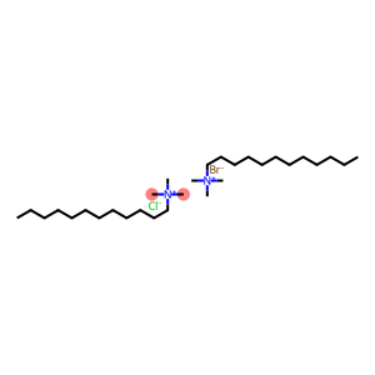
1.Development status
Cationic surfactants have not been widely used in industry for a long time, and their demand has been growing rapidly year by year. However, because their main applications are in special uses such as fungicides, fiber softeners, and antistatic agents, their usage is relatively less compared with anionic and non-ionic surfactants.
Cationic surfactants generally have good properties such as emulsification, wetting, washing, sterilization, softening, antistatic, and anti-corrosion. Due to their special properties and applications, they have good development potential. As the scope of industrial and civil applications continues to expand, their varieties and demand will continue to increase.
2.Classification
Most cationic surfactants with commercial value are derivatives of organic nitrogen compounds, where the positive charge is carried by nitrogen atoms. There are also some new types of cationic surfactants where the positive charge is carried by atoms such as phosphorus, sulfur, iodine, and arsenic. According to the chemical structure of cationic surfactants, they can be mainly divided into four categories: amine salt type, quaternary ammonium salt type, and heterocyclic type.
Amine salt-type cationic surfactants are a general term for primary amine salt, secondary amine salt, and tertiary amine salt surfactants. Their properties are extremely similar, and many products are mixtures of primary amines and secondary amines. This type of surfactant is mainly salts formed by fatty amines and inorganic acids, and is only soluble in acidic solutions. Under alkaline conditions, amine salts easily react with alkalis to form free amines, which reduces their solubility, thus limiting their scope of application to a certain extent.
Quaternary ammonium salt-type cationic surfactants are the most important type of cationic surfactants, with properties and preparation methods different from those of amine salt-type ones. Such surfactants can dissolve in both acidic and alkaline solutions, possess a series of excellent properties, and have good compatibility with other types of surfactants. Therefore, they have a relatively wide range of applications.
Heterocyclic type
The heterocyclic rings contained in cationic surfactant molecules are mainly nitrogen-containing ones such as morpholine ring, pyridine ring, imidazole ring, piperazine ring and quinoline ring.
3.Synthesis
The main reaction for synthesizing cationic surfactants is the N-alkylation reaction. Among them, the reaction in which tertiary amines react with alkylating agents to form quaternary ammonium salts is also called quaternization reaction.
Alkyl quaternary ammonium salt
Alkyl quaternary ammonium salts are one of the important varieties of quaternary ammonium salt-type cationic surfactants, and have been widely used as fungicides, fiber softeners, mineral flotation agents, emulsifiers, etc. Their structural feature is that the nitrogen atom is connected with four alkyl groups, that is, all four hydrogen atoms of the ammonium ion are replaced by alkyl groups. Usually, only one or two of these alkyl groups are long-chain hydrocarbon alkyl groups, and the remaining alkyl groups have one or two carbon atoms. According to their structural characteristics, there are mainly three synthesis methods for alkyl quaternary ammonium salts: prepared by the reaction of higher alkyl halides with lower tertiary amines, prepared by the reaction of higher alkyl amines with lower alkyl halides, and prepared by the formaldehyde-formic acid method.
Quaternary ammonium salts containing heteroatoms
The so-called quaternary ammonium salts containing heteroatoms here generally refer to quaternary ammonium salts that contain heteroatoms such as O, N, and S in their hydrophobic hydrocarbon chains, that is, surfactants that contain amide bonds, ether bonds, ester bonds, or thioether bonds in their lipophilic groups. Since the hydrophilic quaternary ammonium cation group and the alkyl hydrophobic group are connected through groups such as amide, ester, ether, or thioether rather than being directly linked, some people also refer to such quaternary ammonium salts as indirectly linked cationic surfactants.
Quaternary ammonium salts containing benzene rings
This type of surfactant is mainly used as a bactericide, foaming agent, wetting agent, and dye fixing agent, among others. In the synthesis process, the main method for introducing aromatic rings is to use benzyl chloride as an alkylating reagent to react with tertiary amines. Benzyl chloride is prepared by the side-chain chlorination reaction of toluene. To avoid chlorination on the benzene ring, this reaction is required to be carried out in an enamel kettle or a glass-lined tower reactor.
Quaternary ammonium salts containing heterocycles
The heterocyclic rings contained in quaternary ammonium salt molecules are mainly morpholine ring, piperazine ring, pyridine ring, quinoline ring and imidazole ring, etc.
Amine salt type
Amine salt-type cationic surfactants mainly include three major categories: long-chain alkyl primary amine salts, secondary amine salts, and tertiary amine salts.
4.Application
Cationic surfactants have good functions such as sterilization, softening, antistatic, and anti-corrosion properties, as well as certain emulsifying and wetting properties. They are also often used as phase transfer catalysts. However, this type of surfactant is rarely used alone as a detergent. Because the surface of many substrates in aqueous solutions, especially in alkaline aqueous solutions, usually carries a negative charge. During application, the positively charged surfactant will arrange on the substrate surface with the hydrophilic groups inward and the hydrophobic groups outward, making the substrate surface hydrophobic, which is not conducive to washing and may even have negative effects. In addition, the main application fields of this type of surfactant are different from other surfactants, which are used to reduce surface tension. Instead, they utilize their structural characteristics for other special applications.
Post time: Mar-19-2026