

The application fields of cleaning agents include light industry, household, catering, laundry, industry, transportation, and other industries. The basic chemicals used include 15 categories such as surfactants, fungicides, thickeners, fillers, dyes, enzymes, solvents, corrosion inhibitors, chelating agents, fragrances, fluorescent whitening agents, stabilizers, acids, alkalis, and abrasives.
1.Household cleaning agent
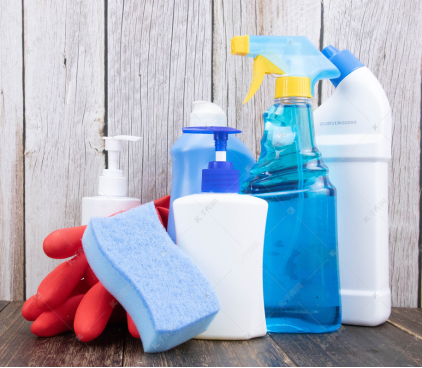
Home cleaning involves cleaning and maintaining buildings or industrial equipment, such as cleaning floors, walls, furniture, carpets, doors, windows, and bathrooms, as well as cleaning the surfaces of stone, wood, metal, and glass. This type of cleaning agent generally refers to the cleaning of hard surfaces.
Common household cleaning agents include deodorants, air fresheners, floor wax, glass cleaners, hand sanitizers, and cleaning soaps. Disinfectants and bactericides in formulations containing o-phenylphenol, o-phenyl-p-chlorophenol, or p-tert-amylphenol have a relatively narrow range of applications, mainly used in hospitals and guest rooms, and can effectively kill tuberculosis bacteria, staphylococci, and salmonella.
1.Commercial kitchen cleaning
Commercial kitchen cleaning refers to the cleaning of restaurant glassware, dinner plates, tableware, pots, grills, and ovens. It is generally done by machine washing, but there is also manual cleaning. Among commercial kitchen cleaning agents, the ones with the largest consumption are detergents for automatic cleaning machines, as well as supporting rinsing aids, bactericides, and drying aids.
1.Cleaning agents used in the transportation industry
In the transportation industry, cleaning agents are mainly used for cleaning the interior and exterior of vehicles such as cars, trucks, buses, trains, airplanes, and ships, as well as for cleaning vehicle components (such as brake systems, engines, turbines, etc.). Among these, the cleaning of external surfaces is similar to metal cleaning in the industrial field.
Cleaning agents used in the transportation industry include waxes, exterior surface cleaners for vehicle bodies, and windshield cleaners. The exterior cleaners for trucks and public buses can be either alkaline or acidic, but only alkaline products can be used on aluminum alloy surfaces. Train exterior cleaners generally contain organic acids, inorganic acids, and surfactants. Aircraft cleaning agents also constitute an important consumer sector. Cleaning the surface of aircraft can not only improve aviation safety but also enhance economic efficiency. Aircraft cleaning agents typically have special standards, need to be able to clean heavy dirt, and are mostly independently developed by the aviation industry.
1.Industrial cleaning agent
Industrial cleaning is required for metal surfaces, plastic surfaces, tanks, filters, oilfield equipment, grease layers, dust, paint removal, wax removal, etc. Metal surfaces must be clean before painting or coating to achieve better adhesion. Metal cleaning often needs to remove lubricating grease and cutting fluid from its surface, so solvent-based cleaning agents are mostly used. Metal cleaning objects are divided into two major categories: one is rust removal, and the other is oil removal. Rust removal is mostly carried out under acidic conditions, which can not only remove the oxide layer formed on the surface of metals such as steel, but also remove insoluble metal substances and other corrosion products deposited on boiler walls and steam pipes. Oil removal is carried out under alkaline conditions, mainly to remove oily dirt.
Other
Cleaning agents are also used in other fields such as washing, including the cleaning of textiles, the cleaning of flat panel displays and photovoltaic cells, and the cleaning of swimming pools, clean rooms, workrooms, storage rooms, etc.
Post time: Jan-27-2026