

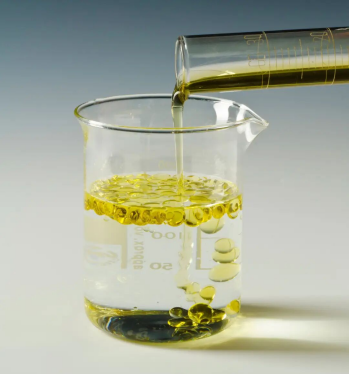
Mixing immiscible substances is a clever chemical reaction! If you’ve ever tried mixing them, you’ll know that oil and water don’t mix easily. However, with the help of emulsifiers and solubilizers, this seemingly impossible feat becomes possible—but aren’t they just two peas in a pod in the bead? Not quite! Each plays a truly unique role. Buckle up, science enthusiasts, and get ready to explore the differences between emulsifiers and solubilizers.
What is an emulsifier?
Emulsifiers are the matchmakers of the molecular world, cleverly bringing together oil molecules and water molecules that usually tend to go their separate ways. Their working principle is to reduce the surface tension between liquids, creating a stable mixture called an emulsion. At the molecular level, emulsifiers are amphiphilic—they have one hydrophilic (water-loving) end and another hydrophobic (oil-loving) end. This duality allows them to insert themselves between oil and water, forming a protective barrier around the droplets to prevent them from separating. Common emulsifiers you may be familiar with include lecithin in egg yolks, as well as the popular soy or sunflower lecithin widely used in chocolate and baked goods to achieve a perfectly smooth texture.
What is a solubilizer?
Although solubilizers are often mistaken for emulsifiers, they play a completely different role in the dance of dissolution. These agents excel at interweaving stubborn oils and water to form a transparent solution, where even the sharpest eye cannot detect separation. Essentially, solubilizers make oils seem to have completely vanished into water. They achieve this by surrounding oil particles with a hydrophilic shell, essentially camouflaging them in a watery coat, allowing them to dissolve without a trace. This process produces a solution rather than an emulsion. You can find solubilizers in various products, from facial cleansers that wash away oily cosmetics to essential oil diffusers that emit fragrance without leaving residues, such as polysorbates, alcohols, and ethoxylated compounds.
What is the difference between them?
The key difference between emulsifiers and solubilizers lies in their working outcomes. Emulsifiers help create new textures and consistencies, as evidenced by the stable emulsions formed when oil droplets are suspended throughout an aqueous base. The result is a product that appears cloudy, but this is because it is filled with tiny oil beads that complement the surrounding water. In contrast, solubilizers make oil completely disappear into water, playing a crucial role in products where transparency is paramount. They sneak oil into water, resulting in a glass-clear solution.
Post time: Feb-06-2026