

1.The concept of flotation
Flotation, also known as flotation beneficiation , is a mineral processing technology that separates useful minerals from gangue minerals at the gas-liquid-solid phase interface by utilizing the differences in surface properties of different minerals in ores, and is also called “interface separation”. All technological processes that directly or indirectly use phase interfaces to achieve particle separation based on the differences in interface properties of different mineral particles are referred to as flotation.
Mineral surface properties refer to the physical, chemical and other properties of the surface of mineral particles, such as surface wettability, surface electrical properties, the types, saturation, and activity of chemical bonds of surface atoms, etc. Different mineral particles have certain differences in surface properties. By utilizing these differences in particle surface properties, mineral separation and enrichment can be achieved with the help of phase interfaces. Therefore, the flotation process involves gas-liquid-solid three-phase interfaces.
Mineral surface properties can be changed through artificial intervention, with the aim of increasing the surface differences between useful minerals and gangue mineral particles to facilitate their separation. In flotation, flotation reagents are usually used to artificially change mineral surface properties, expand the differences in surface properties between minerals, increase or decrease the hydrophobicity of mineral surfaces, so as to adjust and control the flotation behavior of minerals and obtain better separation results. Therefore, the application and development of flotation technology are closely related to flotation reagents.
Since the surface properties of mineral particles are different from mineral physical parameters such as density and magnetic susceptibility, which are difficult to change, the surface properties of mineral particles can basically be artificially intervened to have the required differences in surface properties between minerals for separation. Therefore, flotation is widely used in mineral separation and is known as the universal mineral processing method. It is especially the most widely used and effective mineral processing method in the separation of fine and ultra-fine materials.
2.Applications of Flotation
Mineral processing is a production operation that prepares raw materials for metal smelting and chemical industry, and froth flotation has become one of the most important mineral processing methods. Almost all mineral resources can be separated by flotation.
At present, flotation is widely used in ferrous metal ores mainly for beneficiating iron and manganese, such as hematite, smithsonite, ilmenite and other minerals; precious metal ores mainly for beneficiating gold and silver; non-ferrous metal ores such as copper, lead, zinc, cobalt, nickel, molybdenum, antimony, including sulfide minerals like galena, sphalerite, chalcopyrite, chalcocite, molybdenite, pentlandite, and oxide minerals like malachite, cerussite, hemimorphite, cassiterite, wolframite; separation of non-metallic salt minerals such as fluorite, apatite, barite, and soluble salt minerals like potash salt and rock salt; as well as separation of non-metallic minerals and silicate minerals such as coal, graphite, sulfur, diamond, quartz, mica, feldspar, beryl, spodumene.
Flotation has accumulated rich experience in the field of mineral processing, with continuous technological progress. For low-grade and structurally complex minerals that were previously considered to have no industrial utilization value, they are now being recycled (secondary resources) through flotation.
As mineral resources become increasingly lean, useful minerals are distributed more finely and mixed in ores, making separation more difficult; in order to reduce production costs, industries such as metallurgical materials and chemicals have higher requirements on the quality standards and precision of processed raw materials, i.e., separated products.
On the one hand, it is necessary to improve quality; on the other hand, regarding the problem that minerals are difficult to separate due to fine particle size, flotation has increasingly shown advantages over other methods, becoming the most widely used and promising mineral processing method at present. Flotation methods have gradually developed from initially being used for sulfide minerals to oxide minerals and non-metallic minerals. Now, the total amount of minerals processed by flotation worldwide reaches billions of tons every year.
In recent decades, the application of flotation technology is no longer limited to the field of mineral processing engineering, but has expanded to environmental protection, metallurgy, papermaking, agriculture, chemical industry, food, materials, medicine, biology and other fields.
For example, flotation recovery of useful components in intermediate products, volatiles and slags of pyrometallurgy; flotation recovery of hydrometallurgical leaching residues and displaced precipitation products; flotation in the chemical industry for deinking of recycled paper and fiber recovery from pulp waste liquid; extraction of heavy crude oil from riverbed ore sand, separation of small solid pollutants, colloids, bacteria, and removal of trace metal impurities from sewage are typical applications in environmental engineering.
With the improvement of flotation processes and methods, and the emergence of new and efficient flotation reagents and equipment, flotation will be more widely used in more industries and fields. It should be noted that when using flotation processes, reagents will make the processing cost higher (compared with magnetic separation and gravity separation); the required particle size for beneficiation is relatively strict; there are many factors affecting the flotation process, with high technological requirements; and wastewater containing residual reagents is harmful to the environment.
3.Content of flotation research
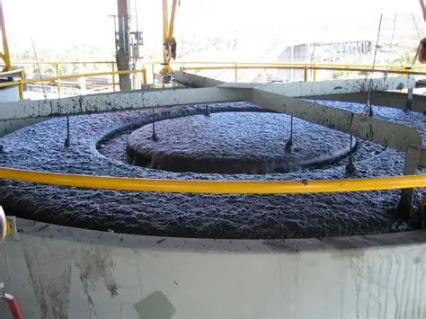
The flotation process involves solid minerals and separation media (water, gas). The main contents of the research include the basic principles of flotation, flotation reagents, flotation machinery, flotation processes, etc.
The basic theory of flotation includes the floatability of minerals, the properties of separation interfaces, etc., studying the properties of phase interfaces, the interaction between phases, the mineralization mechanism of bubbles, etc.; the research on flotation reagents includes the types, structures, properties, action mechanisms, preparation and usage methods of reagents; the research on flotation machinery includes the structure, working principle and application occasions of flotation machines; the research on flotation processes refers to the process structure, the influence and control of process factors, and the reagent system; in addition, there is research on the practical application of various ores.
The theoretical system of flotation research involves disciplines such as process mineralogy, organic chemistry, inorganic chemistry, physical chemistry (interface chemistry, colloid chemistry), fluid mechanics, mechanical engineering, automatic detection, and technical and economic analysis.
Post time: Feb-09-2026