

Wetting effect, requirement: HLB: 7-9
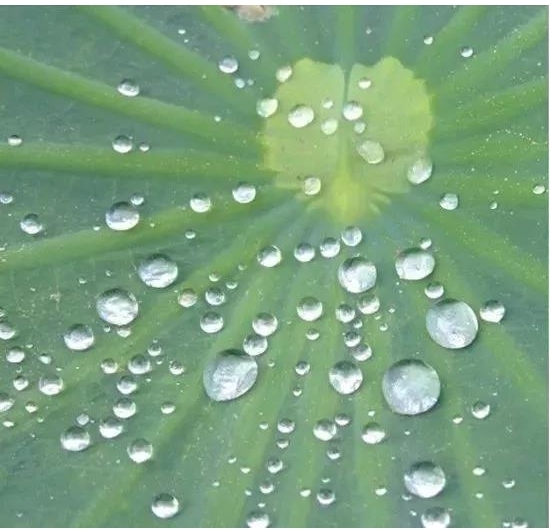
Wetting is defined as the phenomenon where the gas adsorbed on a solid surface is displaced by a liquid. Substances that can enhance this displacement capacity are called wetting agents. Wetting is generally categorized into three types: contact wetting (adhesional wetting), immersion wetting (immersional wetting), and spreading wetting (spreading). Among these, spreading represents the highest standard of wetting, and the spreading coefficient is often used as an indicator to evaluate the wetting performance between different systems. In addition, the contact angle is also a criterion for judging the quality of wetting. Surfactants can be used to control the degree of wetting between liquid and solid phases.
In the pesticide industry, some granular formulations and dustable powders also contain a certain amount of surfactants. Their purpose is to improve the adhesion and deposition amount of the pesticide on the target surface, accelerate the release rate and expand the spreading area of the active ingredients under moist conditions, thereby enhancing the efficacy of disease prevention and treatment.
In the cosmetics industry, surfactants act as emulsifiers and are indispensable components in skincare products such as creams, lotions, facial cleansers and makeup removers.
Micelles and Solubilization,requirements: C > CMC (HLB 13–18)
The minimum concentration at which surfactant molecules associate to form micelles. When the concentration exceeds the CMC value, surfactant molecules arrange themselves into structures such as spherical, rod-like, lamellar, or plate-like configurations.
Solubilization systems are thermodynamic equilibrium systems. The lower the CMC and the higher the degree of association, the greater the maximum additive concentration (MAC). The effect of temperature on solubilization is reflected in three aspects: it influences micelle formation, the solubility of solubilizates, and the solubility of surfactants themselves. For ionic surfactants, their solubility increases sharply with rising temperature, and the temperature at which this abrupt increase occurs is called the Krafft point. The higher the Krafft point, the lower the critical micelle concentration.
For polyoxyethylene nonionic surfactants, when the temperature rises to a certain level, their solubility drops sharply and precipitation occurs, causing the solution to turn turbid. This phenomenon is known as clouding, and the corresponding temperature is called the cloud point. For surfactants with the same polyoxyethylene chain length, the longer the hydrocarbon chain, the lower the cloud point; conversely, with the same hydrocarbon chain length, the longer the polyoxyethylene chain, the higher the cloud point.
Nonpolar organic substances (e.g., benzene) have very low solubility in water. However, adding surfactants such as sodium oleate can significantly enhance the solubility of benzene in water—a process termed solubilization. Solubilization is distinct from ordinary dissolution: the solubilized benzene is not uniformly dispersed in water molecules but trapped within the micelles formed by oleate ions. X-ray diffraction studies have confirmed that all types of micelles expand to varying degrees after solubilization, while the colligative properties of the overall solution remain largely unchanged.
As the concentration of surfactants in water increases, surfactant molecules accumulate on the liquid surface to form a closely packed, oriented monomolecular layer. Excess molecules in the bulk phase aggregate with their hydrophobic groups facing inward, forming micelles. The minimum concentration required to initiate micelle formation is defined as the critical micelle concentration (CMC). At this concentration, the solution deviates from ideal behavior, and a distinct inflection point appears on the surface tension vs. concentration curve. Further increasing the surfactant concentration will no longer reduce the surface tension; instead, it will promote the continuous growth and multiplication of micelles in the bulk phase.
When surfactant molecules disperse in a solution and reach a specific concentration threshold, they associate from individual monomers (ions or molecules) into colloidal aggregates called micelles. This transition triggers abrupt changes in the solution’s physical and chemical properties, and the concentration at which this occurs is the CMC. The process of micelle formation is referred to as micellization.
The formation of micelles in aqueous surfactant solutions is a concentration-dependent process. In extremely dilute solutions, water and air are nearly in direct contact, so the surface tension decreases only slightly, remaining close to that of pure water, with very few surfactant molecules dispersed in the bulk phase. As the surfactant concentration increases moderately, molecules rapidly adsorb onto the water surface, reducing the contact area between water and air and causing a sharp drop in surface tension. Meanwhile, some surfactant molecules in the bulk phase aggregate with their hydrophobic groups aligned, forming small micelles.
As the concentration continues to rise and the solution reaches saturation adsorption, a densely packed monomolecular film forms on the liquid surface. When the concentration hits the CMC, the surface tension of the solution reaches its minimum value. Beyond the CMC, further increasing the surfactant concentration barely affects the surface tension; instead, it increases the number and size of micelles in the bulk phase. The solution is then dominated by micelles, which serve as microreactors in the synthesis of nanopowders. With continued concentration increase, the system gradually transitions to a liquid crystalline state.
When the concentration of an aqueous surfactant solution reaches the CMC, the formation of micelles becomes prominent with increasing concentration. This is characterized by an inflection point in the surface tension vs. log concentration curve (γ–log c curve), along with the emergence of non-ideal physical and chemical properties in the solution.
Ionic surfactant micelles carry high surface charges. Due to electrostatic attraction, counterions are attracted to the micelle surface, neutralizing part of the positive and negative charges. However, once the micelles form highly charged structures, the retarding force of the ionic atmosphere formed by counterions increases significantly—a property that can be exploited to adjust the dispersibility of nanopowders. For these two reasons, the equivalent conductivity of the solution decreases rapidly with increasing concentration beyond the CMC, making this point a reliable method for determining the critical micelle concentration of surfactants.
The structure of ionic surfactant micelles is typically spherical, consisting of three parts: a core, a shell, and a diffuse electric double layer. The core is composed of hydrophobic hydrocarbon chains, similar to liquid hydrocarbons, with a diameter ranging from approximately 1 to 2.8 nm. The methylene groups (-CH₂-) adjacent to the polar head groups possess partial polarity, retaining some water molecules around the core. Thus, the micelle core contains a considerable amount of trapped water, and these -CH₂- groups are not fully integrated into the liquid-like hydrocarbon core but instead form part of the non-liquid micelle shell.
The micelle shell is also known as the micelle-water interface or the surface phase. It does not refer to the macroscopic interface between micelles and water but rather the region between micelles and the monomeric aqueous surfactant solution. For ionic surfactant micelles, the shell is formed by the innermost Stern layer (or fixed adsorption layer) of the electric double layer, with a thickness of about 0.2 to 0.3 nm. The shell contains not only the ionic head groups of surfactants and a portion of bound counterions but also a hydration layer due to the hydration of these ions. The micelle shell is not a smooth surface but rather a “rough” interface, a result of fluctuations caused by the thermal motion of surfactant monomer molecules.
In non-aqueous (oil-based) media, where oil molecules predominate, the hydrophilic groups of surfactants aggregate inward to form a polar core, while the hydrophobic hydrocarbon chains form the outer shell of the micelle. This type of micelle has a reversed structure compared to conventional aqueous micelles and is therefore called a reverse micelle; by contrast, micelles formed in water are termed normal micelles. Figure 4 shows a schematic model of reverse micelles formed by surfactants in non-aqueous solutions. In recent years, reverse micelles have been widely used in the synthesis and preparation of nanoscale drug carriers, particularly for the encapsulation of hydrophilic drugs.
Post time: Dec-26-2025