

During the surfactant selection process, many R&D engineers encounter a common challenge: multiple raw materials show qualified emulsification indicators and similar HLB ranges on technical datasheets, with little apparent difference in physicochemical parameters. Nevertheless, once incorporated into practical formulations, they may trigger issues such as emulsion delamination, oil separation, coarsening during storage, and premature demulsification under working conditions. Datasheet parameters only serve as preliminary screening references. Real emulsifying capacity, compatibility stability and resistance to field conditions can only be identified through parallel controlled tests. As an enterprise focusing on the R&D and application technical services of specialty surfactants, Shanghai Qixuan Chemical Technology Co., Ltd. relies on its in-house application laboratory to provide professional comparative emulsification performance testing services for customers covering cleaning, oilfield, pesticide emulsion, asphalt and mineral processing sectors. Controlled and reproducible parallel tests deliver solid experimental evidence for raw material screening, formulation optimization and competitor benchmarking.
Shanghai Qixuan Chemical has deep roots in the surfactant sector. Its product portfolio covers anionic‑nonionic compound emulsifiers, asphalt‑specific emulsifiers, pesticide emulsifying auxiliaries, oilfield surfactants, industrial cleaning additives and mineral processing interface regulators. The business serves a wide range of industrial segments with vastly different requirements for emulsified systems. No single emulsifying additive can fit all scenarios. Pesticide emulsion systems must tolerate high‑hardness groundwater, remain homogeneous during long‑term storage with low foaming, and guarantee uniform efficacy when applied in farmlands. Asphalt emulsification requires controllable demulsification: the emulsion must stay stable inside storage tanks for extended periods yet demulsify precisely upon mixing with aggregates, making the regulation of demulsification windows highly challenging. Emulsified systems for heavy oil viscosity reduction and flooding in oilfields are subjected to harsh downhole conditions of elevated temperature and high salinity, where conventional surfactants tend to lose efficacy rapidly. For industrial cleaning, emulsifiers are expected to encapsulate and detach oil contaminants rapidly while preventing recontamination. Mineral processing chemicals rely on precise interface regulation to strike a balance between emulsification dispersion and flotation selectivity. Variations in temperature, water quality, pH and shear conditions will substantially alter the final performance of emulsified systems, which explains why formulation risks cannot be predicted merely from product specifications.
To bridge the validation gap between raw material parameters and field application, Qixuan Chemical has built an independent application evaluation laboratory, with comparative emulsification testing as one of its core technical services. All evaluation procedures follow the principle of controlled variables to ensure scientific validity of comparison tests. During testing, the oil phase, water hardness, system pH, stirring shear rate, emulsification temperature and dosage are fixed. Only the surfactant samples under evaluation are replaced. Parallel tests are conducted under identical conditions to eliminate errors introduced by external interference. Test protocols can be customized to replicate customers’ on‑site formulations instead of being limited to general standard methods, so that test results can directly guide adjustments for commercial formulations.
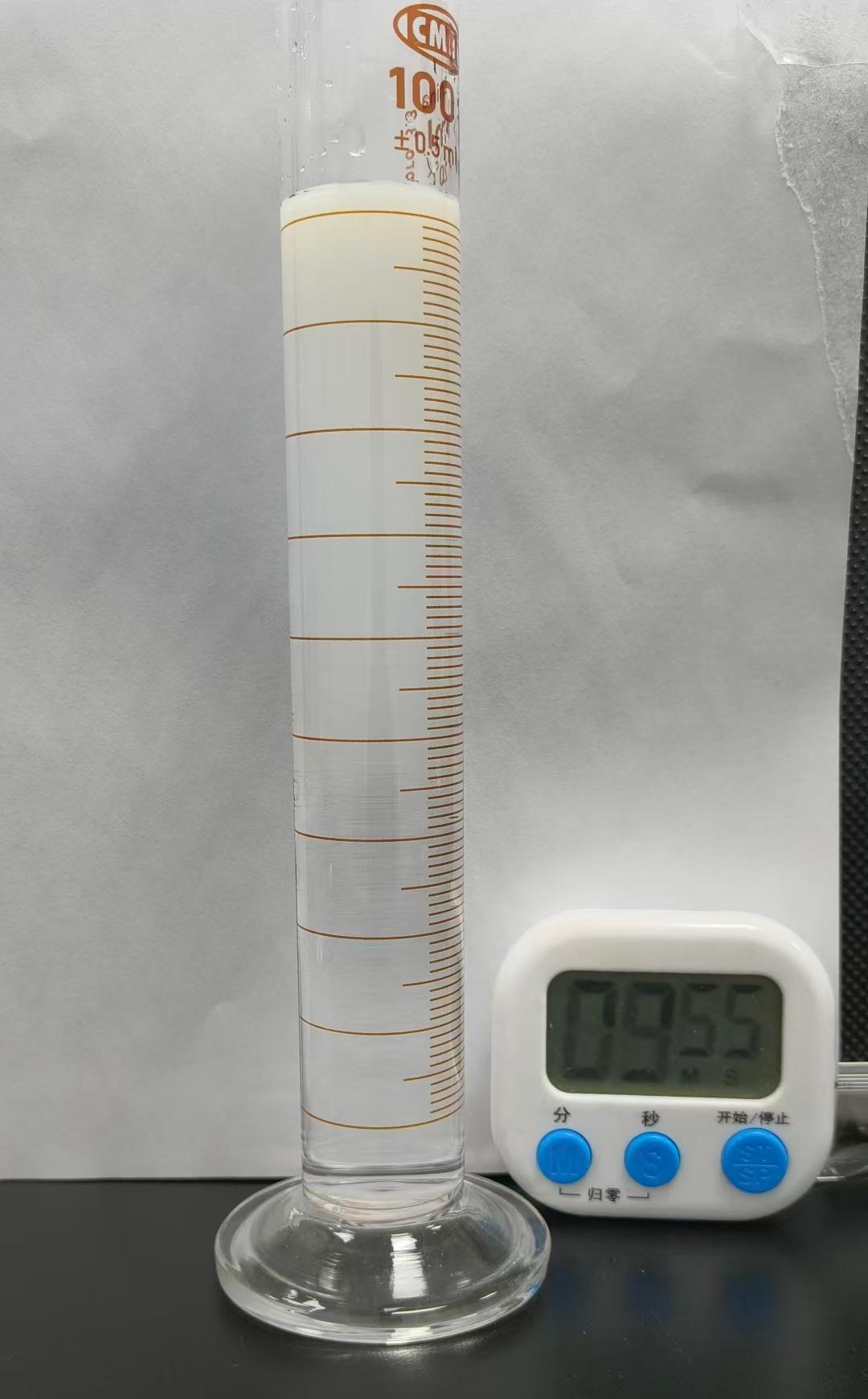
Comparative emulsification assessments cover the full lifecycle rather than only capturing dispersion immediately after homogenization. The laboratory records the ease of initial emulsification, fineness of emulsion appearance and changes in particle size distribution. Ambient static stability tests are carried out to document the onset of delamination, oil separation and sediment formation. Optional extended tests include water hardness tolerance, high‑low temperature cycling stability, salt resistance and compatibility screening. Specialized indicators are available for asphalt, pesticide and oilfield applications, such as storage stability of emulsified asphalt, demulsification timing during aggregate mixing, cold/hot storage stability and post‑dilution dispersibility of pesticide emulsions, as well as emulsifying viscosity reduction performance after high‑temperature aging for oilfield systems. Original experimental records, side‑by‑side sample photos and data files are retained throughout testing. A comprehensive comparison report is issued, outlining performance gaps, merits and drawbacks of each candidate sample and recommended application directions to support internal R&D reviews and supplier benchmarking.
Distinct from routine single‑item testing services on the market, Qixuan Chemical’s laboratory functions not merely as an institution issuing test data, but as an external technical collaboration platform for customer R&D teams. At the formulation iteration stage, many clients need to select among multiple candidate emulsifiers and different compounding schemes. Establishing a complete in‑house evaluation system is time‑consuming and costly due to investment in equipment, reagents and lab personnel. Customers only need to provide formulation details, operating parameters, samples for comparison and expected performance targets. Our technical team customizes protocols, completes all parallel comparison tests, delivers objective and impartial conclusions, and proposes formulation tuning advice including dosage optimization, synergistic compounding and auxiliary additive upgrades. The comparative emulsification testing service can be deployed efficiently for new product raw material screening, cost‑driven substitution benchmarking, and troubleshooting unstable emulsions emerging in mass production. It shortens R&D cycles and mitigates the risk of failed on‑site pilot trials.
Within the competitive landscape of fine chemical formulation, a stable and controllable emulsified system underpins consistent product quality. Most formulation failures can be traced back to insufficient targeted parallel emulsification validation in the early stage. Reliance on specification‑based selection often underestimates compatibility conflicts and environmental tolerance discrepancies between different systems. Qixuan Chemical adheres to the dual‑driven strategy of “products plus application technology”. While continuously upgrading its portfolio of specialty surfactants for various industries, the company opens its application evaluation capabilities on a regular basis, including comparative emulsification tests, formulation compatibility verification and long‑term stability monitoring.
This comparative testing capability has helped customers avoid numerous potential risks at the stage of new product launch and raw material replacement. Some clients have identified water‑hardness‑resistant pesticide emulsifiers through parallel tests and resolved oil separation after dilution with field groundwater. Formulators for asphalt products have defined emulsifier grades matching local aggregate characteristics by evaluating demulsification windows. Oilfield operators have screened temperature‑ and salt‑tolerant surfactants suitable for downhole viscosity reduction after multi‑sample comparisons. Partners in cleaning and mineral processing have also balanced performance and cost via controlled side‑by‑side trials. Conclusions drawn from laboratory tests carry far greater credibility than verbal introductions or datasheet figures.
Moving forward, the application laboratory of Shanghai Qixuan Chemical will keep refining its emulsification evaluation framework and expanding testing capacity for extreme simulated working conditions. We will continue to provide comparative emulsification performance testing, formulation compatibility validation and long‑term stability evaluation services for partners across cleaning, pesticide, asphalt, oilfield and mineral processing industries. We firmly believe that high‑performance surfactants must stand the scrutiny of controlled comparison tests, and robust formulation solutions are built upon repeated objective and reproducible validation.
If you are engaged in emulsifier screening, formulation optimization or competitor benchmarking, or troubled by emulsion delamination, poor storage stability and inadequate field adaptability, please contact Shanghai Qixuan Chemical to discuss customized comparative emulsification testing solutions. Empower your formulation R&D decisions with objective laboratory data.
Post time: Oct-22-2026