

The mechanism of crude oil demulsifiers is the phase transfer-reverse deformation mechanism. The addition of demulsifiers triggers a phase transition, producing surfactants (reverse demulsifiers) that form emulsions of the opposite type to those formed by emulsifiers. Such demulsifiers react with hydrophobic emulsifiers to form complexes, thereby depriving the emulsifiers of their emulsifying capacity.
Collision interfacial film rupture mechanism. Under heating or stirring conditions, demulsifiers gain abundant opportunities to collide with the interfacial film of emulsions, adsorb onto the interfacial film, or displace part of the surface-active substances. This ruptures the interfacial film, drastically reducing its stability and leading to demulsification via flocculation and coalescence.
Crude oil emulsions frequently emerge during the production and refining of petroleum products. Most major crude oils worldwide are extracted in the form of emulsions. An emulsion consists of at least two immiscible liquids, one of which is suspended as extremely fine dispersions—droplets with a diameter of approximately 1 mm—in the other liquid.
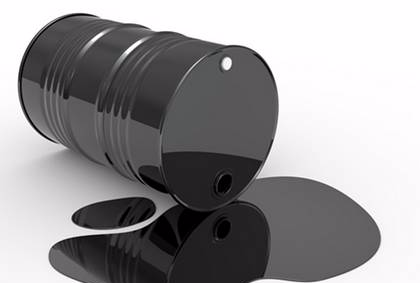
One of these liquids is usually water, and the other is typically oil. Oil may disperse as tiny droplets within water, forming an oil-in-water emulsion, where water serves as the continuous phase and oil as the dispersed phase. Conversely, when oil acts as the continuous phase and water as the dispersed phase, the emulsion is classified as water-in-oil. The majority of crude oil emulsions fall into this category.
Water molecules attract one another, and oil molecules behave identically. However, repulsive forces exist between individual water molecules and oil molecules, which act at the oil-water interface. Surface tension minimizes the area of this interface. For this reason, water droplets in water-in-oil (W/O) emulsions adopt a spherical shape. Furthermore, discrete water droplets tend to form aggregates whose total surface area is smaller than the sum of the surface areas of all separate droplets. Consequently, emulsions composed solely of pure water and pure oil are thermodynamically unstable; the dispersed phase tends to flocculate, forming two distinct layers. The interfacial repulsive forces can be counteracted, and surface tension reduced by accumulating special chemical substances at the oil-water interface. Technically, this effect is widely exploited in industrial production by adding well-known emulsifiers to generate stable emulsions. Any substance capable of stabilizing emulsions in this way must possess a chemical structure that interacts with both water and oil molecules simultaneously, namely containing one hydrophilic group and one hydrophobic group.
Crude oil emulsions are stabilized by natural substances inherent in crude oil, which typically bear polar functional groups such as carboxyl or phenolic groups. These substances may exist in the form of solutions or colloidal dispersions and exhibit a pronounced tendency to adsorb onto terminal surfaces. In such cases, most microparticles disperse within the oil phase and accumulate at the oil-water interface, where they align side-by-side with their polar groups oriented toward the aqueous phase, ultimately forming a physically stable interfacial film. This film is encapsulated by solid substances resembling particulate layers or paraffin crystals, which are visible to the naked eye. This mechanism accounts for the aging and difficult demulsification characteristics of crude oil emulsions.
[Irrelevant garbled Chinese text omitted]
In recent years, research on demulsification mechanisms of crude oil emulsions has largely focused on detailed characterization of droplet coalescence processes and the influence of demulsifiers on interfacial rheological properties. Nevertheless, the interactions between demulsifiers and emulsions are extremely complex. Despite extensive research conducted in this field, no unified consensus on demulsification mechanisms has been reached to date.
Several widely recognized demulsification mechanisms are outlined as follows:
③ Solubilization Mechanism: A single or small number of demulsifier molecules can assemble into micelles. Such macromolecular coils or micelles solubilize emulsifier molecules, triggering demulsification of crude oil emulsions.
④ Folded Deformation Mechanism: Microscopic observations confirm that W/O emulsions feature double or multiple concentric water shells separated by oil interlayers. Under combined heating, stirring and demulsifier treatment, the internal layers of droplets interconnect, inducing droplet coalescence and demulsification.
In addition, domestic research has also investigated demulsification mechanisms for oil-in-water (O/W) crude oil emulsion systems. Studies indicate that an ideal demulsifier must satisfy four key requirements: strong surface activity, excellent wettability, sufficient flocculation capacity, and outstanding coalescence performance.
Demulsifiers encompass a broad range of varieties. Classified by surfactant categorization standards, they fall into four types: cationic, anionic, nonionic, and amphoteric demulsifiers.
Anionic demulsifiers include carboxylates, sulfonates, and polyoxyethylene fatty sulfate salts, suffering drawbacks such as high dosage requirements, mediocre demulsification efficiency, and susceptibility to performance degradation induced by electrolytes.
Cationic demulsifiers are predominantly quaternary ammonium salts, which deliver remarkable demulsification performance for light crude oil yet are unsuitable for heavy oil and aged crude oil.
Nonionic demulsifiers mainly consist of block polyethers initiated by amines, block polyethers initiated by alcohols, alkylphenol-formaldehyde resin block polyethers, phenol-amine-formaldehyde resin block polyethers, silicon-containing demulsifiers, ultra-high molecular weight demulsifiers, polyphosphates, modified block polyethers, as well as amphoteric demulsifiers represented by imidazoline-based crude oil demulsifiers.
Post time: Jul-09-2026