

The structure of fatty amine polyglycerol ether surfactant is shown in the figure below. Its hydrophilic groups are also composed of hydroxyl groups and ether bonds. However, the alternating arrangement of hydroxyl groups and ether bonds changes the ether bond-dominated structure of polyoxyethylene ether-type nonionic surfactants. After dissolving in water, apart from forming weak hydrogen bonds between oxygen atoms on ether bonds and hydrogen atoms in water like the latter, it can also interact with water through hydroxyl groups. Therefore, fatty amine polyglycerol ether surfactants can achieve favorable water solubility with a small glycidol addition number, which means fatty amine polyglycerol ether surfactants possess significantly stronger hydrophilicity than polyoxyethylene ether-type surfactants. In addition, fatty amine polyglycerol ether surfactants contain the structure of organic amines, endowing them with partial properties of both nonionic and cationic surfactants. When the addition number is low, they exhibit characteristics of cationic surfactants, such as acid resistance but poor alkali resistance and certain bactericidal activity. When the addition number rises, their nonionic character is enhanced; they will not precipitate in alkaline solutions and their surface activity remains intact. As nonionic properties increase and cationic properties decline, their incompatibility with anionic surfactants is weakened, enabling the two types to be used in combination.
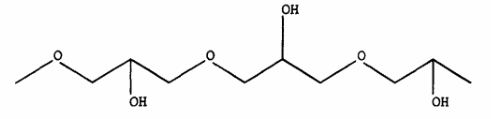
Fatty amine polyglycerol ether surfactants exhibit varying properties depending on different adduct numbers. A low adduct number endows the surfactant with characteristics of cationic surfactants, improves its solubility at low temperatures, and delivers excellent detergency over a wide temperature range. When the adduct number rises, nonionic character increases, so the surfactant will not precipitate in alkaline solutions and its surface activity remains intact. As nonionic properties strengthen and cationic properties weaken, blending it with anionic surfactants can greatly reduce surface tension and enhance emulsifying and wetting performance. Similar to polyoxyethylene chains, its hydrophilicity and steric hindrance effect can significantly restrain precipitation or agglomeration of detergents. Moreover, fatty amine polyglycerol ether possesses certain softening and antistatic properties, which can overcome the problem of poor hand feel after washing fiber products.
Used for pesticide emulsifiers
As fatty amine polyglycerol ether surfactants possess the excellent emulsifying property of nonionic surfactants and certain bactericidal and disinfecting effects of cationic surfactants, they serve as a “multi-functional” mixed surfactant. They can not only raise turbidity but also improve solubility at low temperatures, significantly enhancing the temperature adaptability of pesticide microemulsions formulated with them. This mixed-type surfactant exhibits high efficiency in forming O/W microemulsions, which helps reduce surfactant dosage and cut costs.
Preparation of Antistatic Agents
Fatty amine polyglycerol ether surfactants can form a continuous water film on fiber surfaces via hydrogen bonds between hydrophilic groups, hydroxyl groups and water molecules, thereby delivering favorable moisture absorption and electrical conductivity. Meanwhile, they can form a hydrophobic oil film on fiber surfaces to lower fiber friction and reduce static electricity generation, and also impart softness and smoothness. In addition, the hydrophobic segment of fatty amine polyglycerol ether surfactants is similar to that of fatty amine polyoxyethylene ethers. However, glycidol instead of ethylene oxide is added to the hydrophilic segment, resulting in stronger hydrophilicity. Consequently, their moisture absorption and conductive performance outperform conventional polyoxyethylene ether surfactants. Furthermore, fatty amine polyglycerol ether surfactants are far less toxic and irritating than cationic surfactants, making them promising candidates as high-performance antistatic agents.
Preparation of Mild Personal Care Products
During the synthesis of fatty amine polyglycerol ether surfactants using glycidol, the molecular structure features alternating ether bonds and hydroxyl groups rather than predominantly ether bonds. This avoids dioxane formation and renders higher safety compared with polyoxyethylene ether surfactants. Moreover, abundant hydroxyl groups in fatty amine polyglycerol ether surfactants improve hydrophilicity and reduce irritation, bringing greater mildness to human skin. Therefore, fatty amine polyglycerol ether surfactants are applicable to formulate mild personal care products, especially infant personal care products.
Application in Pigment Surface Modification
Xu Yanli’s research reveals that fatty amine-based nonionic surfactants achieve favorable outcomes in the surface treatment of phthalocyanine green pigments. The desirable performance originates from the following mechanism: such surfactants can be adsorbed onto pigment surfaces through hydrogen bonding formed between hydrogen atoms in -OH and -NH groups and nitrogen atoms on phthalocyanine green pigment surfaces. Their lipophilic hydrocarbon chains construct an adsorbed coating film. The formed coating effectively prevents the agglomeration of pigment particles during drying and inhibits further crystal growth, yielding finely crystalline pigment particles. When the treated pigments are placed in organic media, the hydrocarbon chains feature good compatibility with organic media and rapidly solvate to form a solvation film, facilitating pigment dispersion. Meanwhile, the film hinders flocculation when pigment particles approach each other. This effect intensifies with longer hydrocarbon chains and thicker solvation films, favoring pigment particle refinement and narrow particle size distribution. The hydrophilic groups hydrate to generate hydration films, which effectively suppress flocculation between pigment particles and facilitate dispersion. Fatty amine polyglycerol ether surfactants have superior hydrophilicity and can form thicker hydration films. Accordingly, pigments treated with fatty amine polyglycerol ether surfactants disperse more easily in water with smaller particle sizes, indicating promising application prospects for the surface treatment of phthalocyanine green pigments.
Post time: Jul-23-2026