
-

Chemical Cleaning and Safety Knowledge
1 Chemical Cleaning In semiconductor‑device process experiments, chemical cleaning refers to the removal of various harmful impurities or oil contaminants adsorbed on the surfaces of semiconductors, metallic materials and laboratory utensils. Cleaning employs chemical reagents and organic solvent...Read more -

Classification and Application of Cleaning Agents!
The application fields of cleaning agents include light industry, household, kitchen and catering, laundry, industry, transportation and other industries. The basic chemicals used cover 15 categories such as surfactants, bactericides, thickeners, fillers, dyes, enzymes, solvents, corrosion inhibi...Read more -

Application of fatty amine polyglycerol ether surfactants
The structure of fatty amine polyglycerol ether surfactant is shown in the figure below. Its hydrophilic groups are also composed of hydroxyl groups and ether bonds. However, the alternating arrangement of hydroxyl groups and ether bonds changes the ether bond-dominated structure of polyoxyethyle...Read more -

This is how emulsifiers work
With the improvement of people’s living standards, consumers’ requirements for food are no longer limited to reasonable nutritional value. They also demand satisfactory sensory qualities of food, including appearance, color, aroma, taste, consistency and freshness. As texture-modifyin...Read more -

Antistatic Effect of Surfactants
The detergency of surfactants is the fundamental property that underpins their widest practical applications. It is integral to the daily lives of countless households and is being increasingly adopted across all trades and industrial production sectors. Antistatic Effect of Surfactants Friction ...Read more -

Application of Cleaning Agents
The application fields of cleaning agents include light industry, household, kitchen and dining, laundry, industry, transportation and other industries. The basic chemical substances used cover 15 categories such as surfactants, bactericides, thickeners, fillers, dyes, enzymes, solvents, corrosio...Read more -

Talk about crude oil demulsifiers
The mechanism of crude oil demulsifiers is the phase transfer-reverse deformation mechanism. The addition of demulsifiers triggers a phase transition, producing surfactants (reverse demulsifiers) that form emulsions of the opposite type to those formed by emulsifiers. Such demulsifiers react with...Read more -
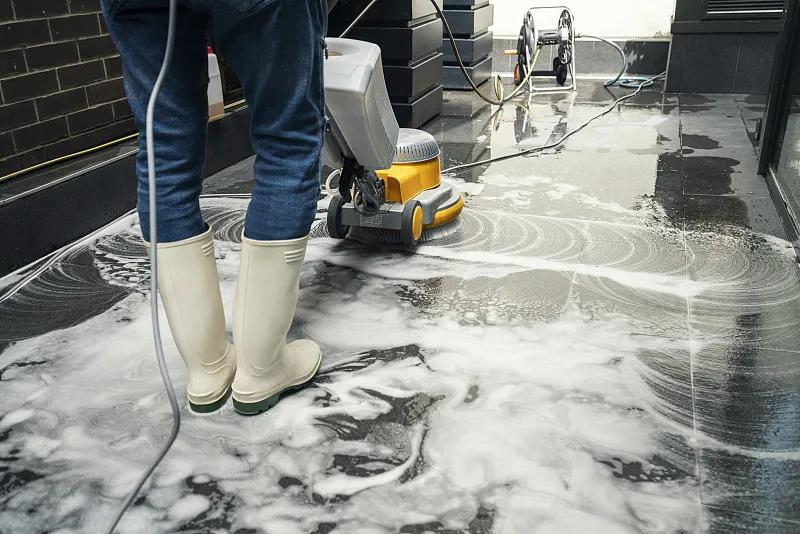
Classification of Industrial Cleaning
Fineness Requirements General Industrial Cleaning, Precision Industrial Cleaning and Ultra-precision Industrial Cleaning General industrial cleaning involves cleaning the surfaces of vehicles, ships and aircraft, which can only remove relatively coarse dirt. Precision industrial cleaning covers c...Read more -
Washing Effect of Surfactants — Various Detergents
The detergency of surfactants is their fundamental property with the most extensive practical applications. It is closely related to the daily lives of countless households and is also being increasingly adopted across all walks of life and various industrial production sectors. Detergents Surfac...Read more -

Emulsification and Solubilization Effects of Surfactants
The steady growth trend of surfactants worldwide has created a favorable external environment for the development and expansion of the cosmetics industry, with increasingly stringent requirements for product structure, varieties, performance and technologies. Therefore, it is necessary to systema...Read more -

Forms and Applications of Fatty Amines
Aliphatic amines refer to a large class of organic amine compounds with carbon chain lengths ranging from C8 to C22. Like common amines, they are divided into four categories: primary amines, secondary amines, tertiary amines and polyamines. Primary, secondary and tertiary amines are classified a...Read more -
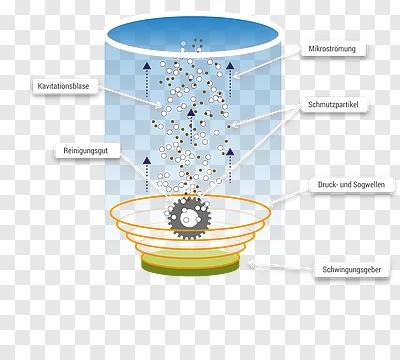
Principle and Notes of Ultrasonic Cleaning
As we all know, the sounds people hear are acoustic wave signals with a frequency ranging from 20 Hz to 20,000 Hz. Acoustic waves with a frequency higher than 20,000 Hz are called ultrasonic waves. Acoustic waves propagate longitudinally in the form of a sine wave, alternating between strong and ...Read more
