

The steady growth trend of surfactants worldwide has created a favorable external environment for the development and expansion of the cosmetics industry, with increasingly stringent requirements for product structure, varieties, performance and technologies. Therefore, it is necessary to systematically develop surfactants that are safe, mild, readily biodegradable and feature special functions, so as to lay a theoretical foundation for the development and application of new products. Priority shall be given to the development of glycoside surfactants, and various polyol and alcohol surfactants can be developed; systematic research and development of soybean phospholipid surfactants shall be carried out; a series of sucrose fatty acid ester products shall be developed, research on compounding technologies shall be intensified, and the application scope of existing products shall be broadened.
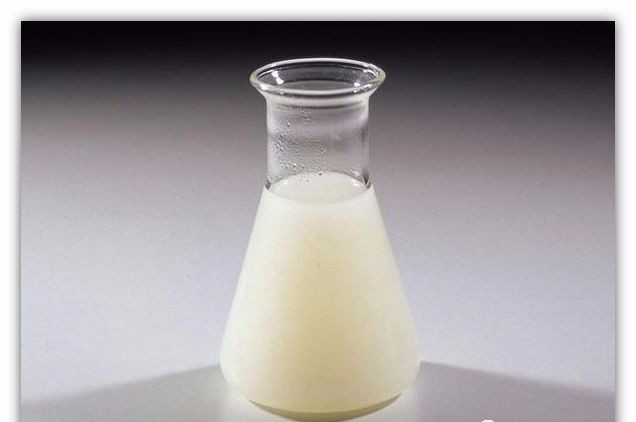
Emulsification refers to the phenomenon in which water-insoluble substances are uniformly emulsified in water to form an emulsion. In cosmetics, emulsifiers are mainly used to produce creams and lotions. Common powder vanishing creams and neutral vanishing creams are all oil-in-water (O/W) emulsions, which can be emulsified with anionic emulsifier fatty acid soap (soap). It is relatively easy to prepare emulsions with low oil content using soap, and the gelling effect of soap can endow the emulsions with high viscosity. Cold creams containing a large amount of oil phase are mostly water-in-oil (W/O) emulsions, which can be emulsified with natural lanolin featuring strong water absorption and high viscosity. Nonionic emulsifiers are the most widely used at present due to their safety and low irritation. Solubilization refers to the phenomenon that slightly soluble or insoluble substances gain increased solubility. When surfactants are added to water, the surface tension of water drops sharply at first, followed by the formation of micelles aggregated by surfactant molecules. The concentration of surfactants required for micelle formation is called the critical micelle concentration. When the surfactant concentration reaches the critical micelle concentration, micelles can adsorb oil or solid particles at their lipophilic ends, thereby improving the solubility of slightly soluble or insoluble substances.
Solubilizers in cosmetics are mainly used in the production of skin lotions, hair growth oils and hair nourishing agents. Oily ingredients in cosmetics, such as fragrances, oils and oil-soluble vitamins, form different solubilization systems due to disparities in their structures and polarities, so appropriate surfactants must be selected as solubilizers. For instance, the substances to be solubilized in skin lotions include fragrances, oils and medicinal ingredients, so alkyl polyoxyethylene ethers can be adopted for solubilization. Though alkylphenol polyoxyethylene ethers (OP series, TX series) feature strong solubilizing capacity, they are generally not applied as they irritate the eyes. In addition, amphoteric derivatives based on castor oil exhibit excellent solvency for perfume oils and vegetable oils, and such surfactants are non-irritating to the eyes, making them suitable for manufacturing mild shampoos and other cosmetic products.
Post time: Jun-30-2026