

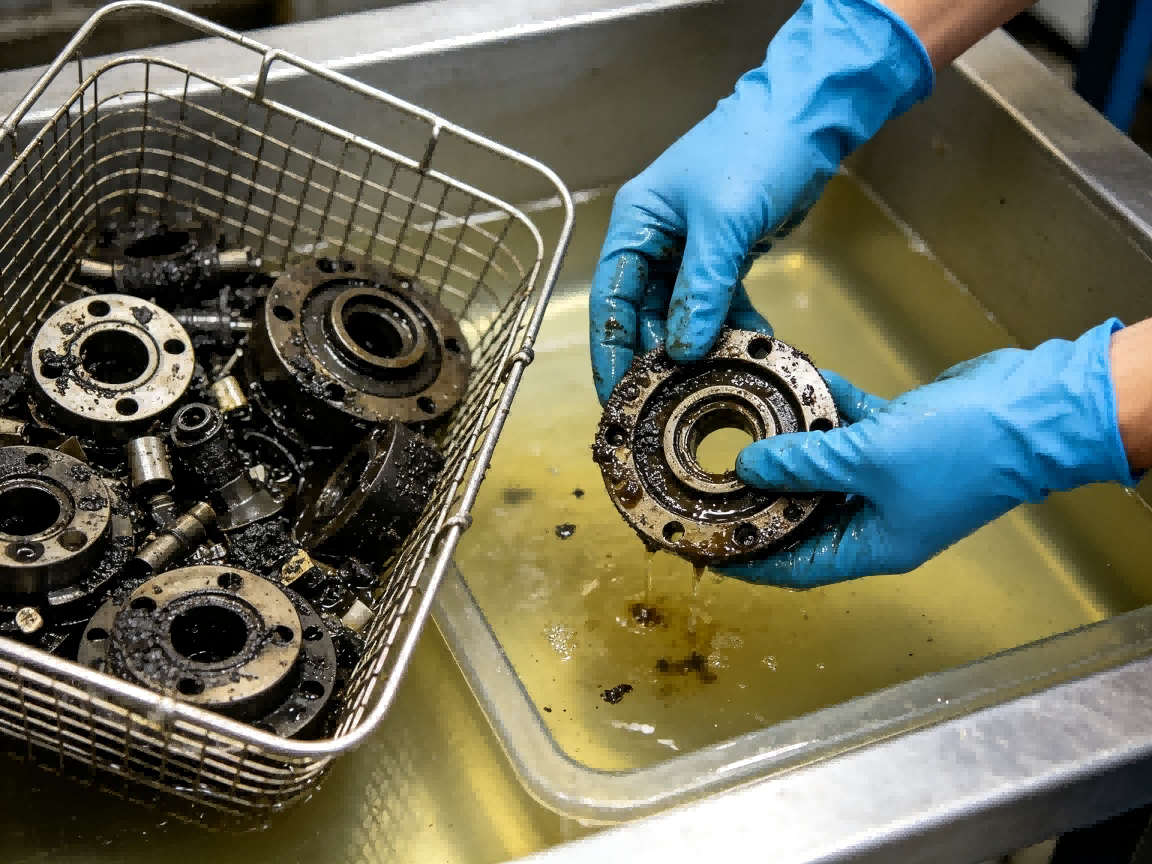
In semiconductor‑device process experiments, chemical cleaning refers to the removal of various harmful impurities or oil contaminants adsorbed on the surfaces of semiconductors, metallic materials and laboratory utensils. Cleaning employs chemical reagents and organic solvents to trigger chemical reactions and dissolution effects with impurities and oil contaminants adsorbed on workpiece surfaces. Physical measures such as ultrasonication, heating and vacuum pumping may also be applied to desorb impurities from workpiece surfaces. Workpieces are then rinsed with large volumes of high‑purity hot‑and‑cold deionized water to obtain clean surfaces.
1.1 Importance of Chemical Cleaning
Chemical cleaning is required for every experiment in process testing. The quality of chemical cleaning exerts a critical influence on experimental results. Improper cleaning may lead to failed or poor‑quality experimental outcomes. Therefore, understanding the functions and principles of chemical cleaning is essential for successful process experiments.
As is well known, one key property of semiconductors is their high sensitivity to impurities. Even trace impurities at the parts‑per‑million level can alter the physical properties of semiconductors. This property is utilised to fabricate semiconductor devices with diverse functions via doping. Nevertheless, this same property creates challenges for semiconductor‑device process experiments. Chemical reagents, processing tools and cleaning water can all act as sources of harmful impurity contamination. Even pristine semiconductor wafers will suffer noticeable impurity contamination after prolonged exposure to ambient air. Chemical cleaning eliminates harmful impurity contamination and maintains clean silicon‑wafer surfaces.
1.2 Scope of Chemical Cleaning
Chemical cleaning mainly covers three categories:
Cleaning of silicon‑wafer surfaces;
Cleaning of metallic materials (e.g., tungsten filaments for evaporation electrodes, molybdenum sheets for evaporation supports, aluminium alloys for evaporation sources, chromium for chromium‑mask fabrication);
Cleaning of tools and vessels (e.g., metal tweezers, quartz tubes, glass containers, graphite moulds, plastic and rubber products).
1.3 Types of Contaminant Impurities on Silicon‑Wafer Surfaces
(1) Molecular‑Type Impurity Adsorption
Typical molecular‑form contaminants adsorbed on silicon‑wafer surfaces include natural or synthetic greases, resins and oils. Impurities introduced during substrate cutting, grinding and polishing mostly fall into this category. Other sources include fingerprints, photoresist residues and leftover organic‑solvent deposits.
Molecular‑type impurities are mostly physically adsorbed and bound to silicon‑wafer surfaces by electrostatic attraction. Molecules of greases, resins and oils are generally non‑polar. Bonding arises from attraction between neutral impurity molecules and unsatisfied residual forces of surface silicon atoms. This interaction is equivalent to van der Waals forces among molecules in molecular crystals. Such attractive forces are relatively weak and decay rapidly with increasing intermolecular distance. The effective interaction range is approximately 2‑3 × 10⁻⁸ cm (2‑3 Å), comparable to molecular diameters. Hence molecular‑type impurities can be removed comparatively easily.
Another major characteristic is that most molecular‑type contaminants are water‑insoluble organic compounds. Their adsorption renders silicon‑wafer surfaces hydrophobic, which hinders effective contact between deionised water / acid‑alkali solutions and wafer surfaces. This prevents reagents from interacting with surface particles and inhibits effective chemical cleaning.
(2) Ionic‑Type Impurity Adsorption
Common ion‑form impurities adsorbed on silicon‑wafer surfaces include K⁺, Na⁺, Ca²⁺, Mg²⁺, Fe²⁺, H⁺, OH⁻, F⁻, Cl⁻, S²⁻, CO₃²⁻ and so forth. These impurities originate from diverse sources: ambient air, utensils and equipment, chemical agents, low‑purity deionised water, tap water, exhaled breath and operator sweat.
Ionic‑type adsorption largely belongs to chemisorption. Impurity ions bond to wafer surfaces through chemical‑bond forces. Equilibrium distances between impurity ions and surface atoms are extremely short, such that adsorbed ions may be regarded as part of the silicon lattice. Chemisorbed ionic impurities can act as trapping centres: some bind free lattice electrons and serve as acceptors; others trap free holes and function as donors. Due to strong chemisorption forces, removing ionic impurities is far more difficult than eliminating molecular contaminants.
(3) Atomic‑Type Impurity Adsorption
Atomic‑form surface contaminants are primarily metallic atoms such as gold, silver, copper, iron and nickel. These metal atoms are usually generated by reductive displacement reactions in acidic etchants, depositing onto silicon‑wafer surfaces.
Atomic‑type adsorption exhibits the strongest binding force and is hardest to eliminate. Heavy‑metal atoms like gold and platinum barely react with ordinary acids and alkalis. Therefore special reagents such as aqua regia are required to form soluble complexes. Complexed metallic species are subsequently washed away with high‑purity deionised water.
1.4 General Silicon‑Wafer Cleaning Procedure
As analysed above, molecular‑type impurities are comparatively easy to remove. Remaining molecular contaminants can mask ionic‑ and atomic‑type impurities and obstruct their removal. Accordingly, molecular contaminants must be fully eliminated first during silicon‑wafer chemical cleaning.
Ionic‑ and atomic‑type impurities are chemisorbed with strong surface affinity. Atomic contaminants are normally present in low quantities and inert to common acids and alkalis; they can only be dissolved by aqua regia or acidic hydrogen‑peroxide solutions. Aqua regia and acidic hydrogen peroxide also dissolve ionic impurities. The standard workflow uses acid‑alkali solutions or alkaline hydrogen peroxide to strip ionic impurities first. Residual ionic contaminants and atomic impurities are then removed using aqua regia or acidic hydrogen peroxide. A final rinse with high‑purity deionised water completes the process.
In summary, the general silicon‑wafer cleaning sequence is: Degreasing → Ion removal → Atomic‑impurity removal → Deionised‑water rinsing.
Silicon wafers must undergo chemical cleaning before every experiment. Nevertheless, surface conditions differ from run to run. Cleaning chemicals and priority targets therefore vary accordingly. Practical cleaning workflows are flexible. Concrete methods and steps shall be determined on a case‑by‑case basis according to actual cleaning‑effect requirements.
1.5 Cleaning Treatment for Common Metals and Utensils
Metallic materials and laboratory tools are major sources of silicon‑wafer contamination. Thorough cleaning of metals and utensils is mandatory to guarantee wafer‑surface cleanliness. The general cleaning principle for metals and utensils is: remove grease contaminants first; perform etching or washing with acids, alkalis, washing solutions or aqua regia; and finish by thorough rinsing with high‑purity deionised water.
2 Safety Knowledge
Experiments frequently employ diverse chemicals and gases, including flammable, explosive, toxic and corrosive acid‑alkali substances. Improper handling may trigger accidents. Preventive measures should be prioritised. If an accident occurs, remain calm and implement appropriate corrective actions promptly.
2.1 Safe Handling of Organic Solvents
Common organic solvents include toluene, acetone, ethanol, methyl ethyl ketone, trichloroethylene and carbon tetrachloride. Most organic solvents are flammable and ignite under high‑temperature conditions or near open flames. Store them in cool locations away from ignition sources. Do not heat solvent containers directly on electric stoves; water‑bath heating is preferred when heating is necessary. In case of fire, extinguish flames with damp cloth, fine sand, carbon‑dioxide extinguishers, carbon‑tetrachloride extinguishers or foam fire extinguishers. Never apply water or water‑based acid‑alkali extinguishing agents.
Organic solvents are volatile and possess varying degrees of toxicity. All operations shall be performed inside fume hoods with adequate ventilation.
2.2 Safe Handling of Acids and Alkalis
Experiments utilise strong‑acid solutions such as sulphuric acid, nitric acid, hydrochloric acid, hydrofluoric acid and aqua regia, as well as strong‑alkali solutions including sodium hydroxide and potassium hydroxide. These substances are highly corrosive to human skin and clothing, requiring careful operational safety control.
Install effective ventilation and exhaust systems in areas where acid or alkali vapours may accumulate.
Operators shall wear appropriate protective gear such as rubber gloves and respirators.
Never pipette acid or alkali solutions by mouth; use pipettes fitted with rubber bulbs.
Exercise caution during transportation to prevent bottle tipping or breakage. Point bottle openings away from personnel when opening containers.
Always add sulphuric acid slowly into water for dilution. Never pour water into concentrated sulphuric acid.
Prior to neutralisation, dilute concentrated acids or alkalis with water, then perform neutralisation using corresponding alkali or acid solutions.
Empty vessels that previously held concentrated acids or alkalis shall be drained completely, repeatedly flushed with water, and then subjected to routine cleaning procedures.
In the event of acid‑alkali burns, flush affected tissue with copious running water immediately. If splashes enter the eyes, irrigate eyes rapidly with large volumes of tap water. Seek immediate medical treatment after rinsing, regardless of burn severity or ocular exposure.
2.3 Safe Handling of Gases
Experimental gases are supplied via high‑pressure cylinders or gas pipelines. Mixing certain gases may result in combustion or explosion.
Gas cylinders are colour‑coded and labelled to identify contained gases. Cylinders hold gas at high pressure; newly filled cylinders reach approximately 150 kg/cm². Special safety precautions apply during storage and usage.
Avoid direct sunlight exposure for gas cylinders in summer. Keep flammable materials and ignition sources away from cylinder‑storage zones.
Store gas pairs that react combustively or explosively upon contact (e.g. hydrogen and oxygen cylinders) in separate isolated rooms to avert accidents caused by gas leakage.
Do not exhaust cylinder gas completely; retain a certain residual pressure inside cylinders.
Prevent grease contamination on cylinder valves and wrenches.
When using hydrogen, purge air out of equipment with inert gas, inspect the whole system for leaks, and install flashback arrestors.
2.4 Safe Handling of Toxic Substances
Prevent poisoning when working with toxic chemical reagents and compounds in experiments. Core safety principles are as follows:
Conduct operations inside fume hoods. Treat waste residues and waste liquids before disposing them at designated safe locations.
Wear respirators and protective gloves. Avoid skin contact and oral ingestion of toxic materials at all costs.
Thoroughly rinse gloves with water before removing them after finishing experiments.
Post time: Jul-30-2026