

The detergency of surfactants is the fundamental characteristic that gives surfactants their greatest practical utility. It is closely related to the daily life of thousands of households and is also increasingly applied in various industries and industrial productions.
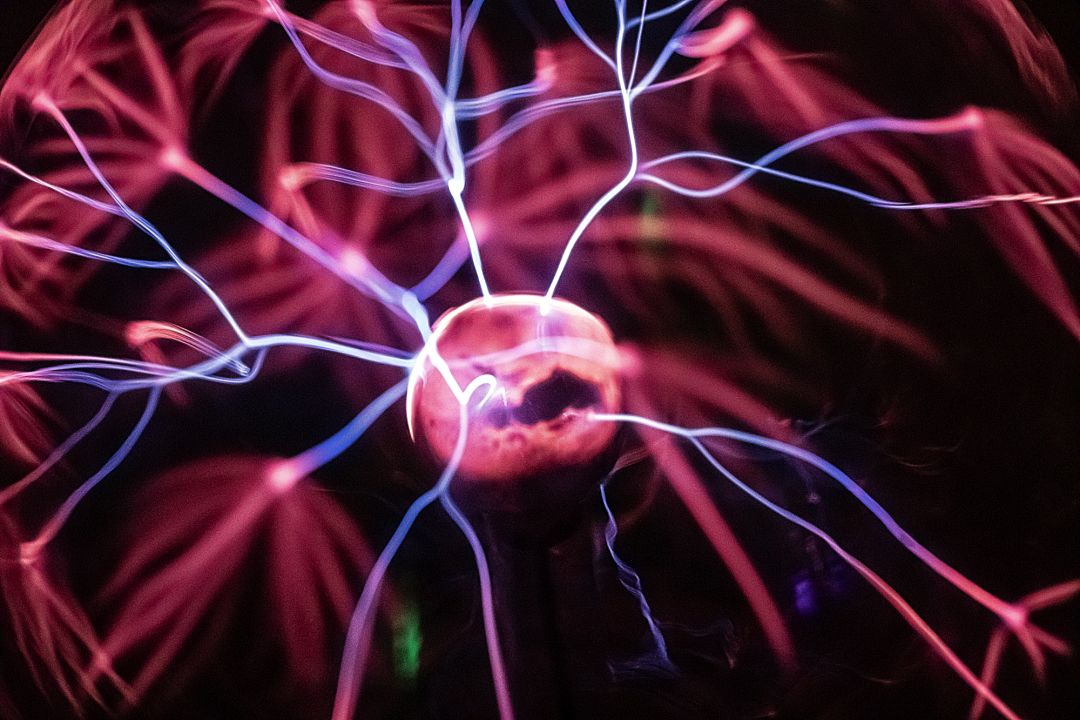
1.Antistatic effect of surfactants
Fibers, plastics and other products often generate static electricity due to friction, which affects the application performance of such products. For example, if fiber fabrics carry static electricity, they commonly suffer from drawbacks such as “clinging” or “static adhesion”, as well as being prone to absorbing dust and getting dirty easily. The impact of static electricity on plastic products is even more significant: such products not only easily adsorb dust, which impairs their transparency, surface cleanliness and appearance, but also reduces their service performance and value.
To eliminate this static phenomenon, the antistatic method using surfactants is mostly adopted at present. Such surfactants are known as antistatic agents.
2.Electrostatic phenomena and their causes
Although the results of the fiber charging sequence obtained by different researchers vary somewhat, fibers containing amide bonds such as wool, nylon and artificial wool tend to be positively charged. The charging conditions of common plastics are shown in Table 10-2. The charging sequence of common substances from positive to negative is as follows: (+) Polyurethane – Hair – Nylon – Wool – Silk – Viscose fiber – Cotton – Hard rubber – Acetate fiber – Vinylon – Polypropylene – Polyester – Polyacrylonitrile – Polyvinyl chloride – Vinyl chloride-acrylonitrile copolymer – Polyethylene – Polytetrafluoroethylene (–). Although the cause of static electricity generation is not yet fully understood, it is generally agreed that static electricity is generated when different types of objects rub against each other, causing movable charges to transfer between the rubbed objects. The type of charge an object carries can be determined by the gain or loss of electrons. An object becomes positively charged if it loses electrons, and negatively charged if it gains electrons.
There are two main methods for eliminating static electricity:
(1) Physical method. Since the magnitude of static electricity is affected by temperature and humidity, physical methods such as adjusting temperature and humidity and corona discharge can be used to eliminate static electricity on the surface of objects.
(2) Surface chemical method. That is, surfactants, also known as antistatic agents, are used to treat the surfaces of fibers and plastic products or mixed into the interior of plastics to achieve the purpose of eliminating static electricity.
4.antistatic agent for fibers
4.1 Requirements for an antistatic agent:
(1) It shall not alter the hand feel of fibers;
(2) It shall have excellent antistatic effect with a low dosage and remain effective at low temperatures;
(3) It shall have good compatibility with resin fibers;
(4) It shall exhibit excellent compatibility with other additives;
(5) It shall not cause foaming or water stains;
(6) It shall be non-toxic and non-irritating to the skin;
(7) It shall maintain good stability.
4.2 Types of Antistatic Agents
The main types of antistatic agents used for fibers are cationic and amphoteric ionic surfactants.
4.3 Mechanism of Action of Antistatic Agents
For surfactants used as fiber antistatic agents, the antistatic mechanism mainly involves two aspects: preventing static electricity generation on the surface of fiber fabrics due to friction and dissipating surface charges. Prevention of frictional electrification is closely related to the structure of surfactants, while the dissipation of surface charges is associated with the adsorption amount and hygroscopicity of surfactants on fiber fabrics.
Cationic surfactants readily adsorb onto the negatively charged fiber surfaces via their own positive charges.
① They can neutralize the surface charges of fibers;
② As cationic surfactants adsorb onto fiber surfaces in the form of positively charged quaternary ammonium ions with their hydrophobic hydrocarbon chains facing outward, a directional adsorption film composed of hydrocarbon chains forms on the fiber surface. This film effectively reduces the frictional force generated on the fiber surface during friction, thereby weakening frictional electrification.
For synthetic fibers with low polarity and strong hydrophobicity, cationic surfactants adsorb onto the fiber surface through van der Waals forces via their hydrophobic hydrocarbon chains, with their polar quaternary ammonium groups facing outward. This covers the fiber surface with hydrophilic polar groups, which not only enhances the electrical conductivity of the fiber surface but also increases its surface moisture, facilitating the dissipation of static electricity generated by friction and achieving an antistatic effect.
The adsorption amount of dioctadecyl ammonium chloride on natural fiber surfaces is significantly higher than that on synthetic fibers, indicating its superior antistatic effect on natural fibers.
Like cationic surfactants, amphoteric ionic surfactants carry positive charges and can also adsorb onto negatively charged fiber surfaces to neutralize static charges. Their hydrophobic groups also reduce friction. Compared with cationic surfactants, they additionally contain an anionic group in their molecular structure, enabling better enhancement of moisture and charge dissipation. Therefore, amphoteric ionic surfactants are high-performance antistatic agents, albeit at a relatively high cost.
Anionic and non-ionic surfactants show poor antistatic effects due to their low adsorption amounts on fiber surfaces. The adsorption amount of non-ionic surfactants is higher than that of anionic surfactants as it is unaffected by fiber surface charges; however, their ability to dissipate static electricity is weak, resulting in far inferior antistatic performance compared to cationic and amphoteric ionic surfactants.
5.Antistatic agents for plastics
Mechanism of surfactants acting as antistatic agents for plastics: Surfactants adsorb onto the plastic surface via van der Waals forces through their hydrophobic hydrocarbon chains, with their polar groups extending outward. A directional adsorption film of surfactants forms on the plastic surface, providing electrical conductivity that allows static charges to dissipate effectively. Meanwhile, the adsorption film also mitigates friction on the plastic surface.
Plastic antistatic agents are classified by surfactant type as follows:
(1) Anionic type;
(2) Cationic type;
(3) Amphoteric ionic type;
(4) Nonionic type.
Antistatic agents can be divided into two categories according to application methods:
(1) Surface-coating antistatic agents;
(2) Internal-mixing antistatic agents.
Post time: Apr-14-2026