

Surfactants pose severe hazards to the human body and environmental ecosystems during their production and application. Adding a certain amount of surfactant‑based solvents to detergents can improve their solubility and washing performance. Nevertheless, these solvents are toxic to some extent and may cause obvious skin irritation. Excessive use of surfactants also brings potential risks to ecosystems. For instance, sodium alkylbenzene sulfonate (ABS) has poor biodegradability. Its heavy application in detergents generates massive foams, leading to excessive foam in urban sewers and rivers. Surfactants containing phosphates cause eutrophication in rivers and lakes upon use. Sulfur dioxide and sulfur trioxide produced during the manufacturing of linear alkylbenzene sulfonate (LAS), as well as dioxin‑like substances in alcohol ethoxylate sulfate (AES)‑type products, are resistant to biodegradation and inflict tremendous damage to the environment.
To meet people’s growing health‑care demands and guarantee the sustainable development of the human living environment, it is imperative to develop surfactants that are as non‑toxic and harmless to humans as possible and cause no pollution to the ecological environment.
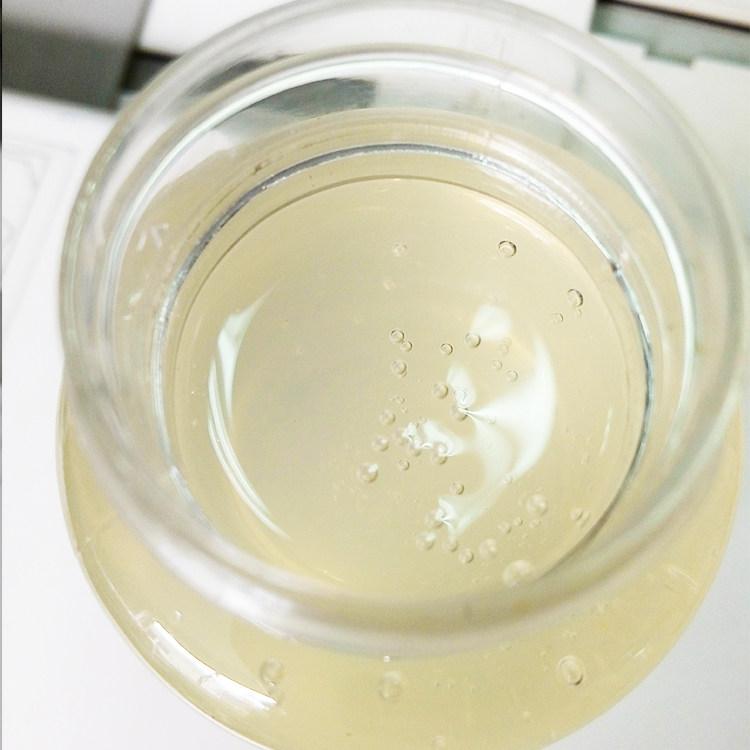
Classification and Properties of Green Surfactants
Green surfactants refer to surfactants processed from natural or renewable resources, with low human irritation and ready biodegradability. According to whether they dissociate in water, green surfactants can be divided into non‑ionic green surfactants and ionic green surfactants. Ionic green surfactants are further classified into cationic, anionic and amphoteric‑ionic types based on their active ingredients after dissolution.
Green surfactants are processed from natural or renewable resources, and thus feature excellent properties such as natural origin, mildness and low irritation. Like conventional surfactants, green surfactants contain hydrophilic groups and hydrophobic groups. Compared with traditional surfactants, green surfactants deliver high‑efficiency detergency, excellent compatibility and favorable environmental compatibility, and exhibit good emulsifying, washing, solubilizing, wetting, dissolving and stabilizing properties.
In addition, each type of green surfactant possesses unique properties. For instance, α‑sulfo fatty acid ester salt (MEC) shows surface activity at low concentrations and hardness‑water resistance; monoalkyl phosphate boasts outstanding foaming and emulsifying performance, antistatic property and special skin affinity. Common green surfactants include α‑sulfo fatty acid methyl ester (MEC), alkyl polyglycoside (APG), glucose amide (APA), alcohol ether carboxylate (AEC), monoalkyl phosphate (MAP), and alkyl glucose amide (MECA).
Properties, Applications and Current Status of Several Types of Green Surfactants
Green surfactants are characterized by natural origin, mildness and low irritation. Similar to conventional surfactants, they have hydrophilic groups and hydrophobic groups. Compared with traditional surfactants, green surfactants feature high‑efficiency detergency, excellent compatibility and favorable environmental compatibility, as well as desirable emulsifying, washing, solubilizing, wetting, dissolving and stabilizing performances.
● Alkyl Polyglucosides (APG)
Alkyl polyglucoside (APG) is a new‑generation eco‑friendly green surfactant. It is a non‑ionic surfactant synthesized by reacting glucose from natural or renewable raw materials such as starch with fatty alcohols. As a novel non‑ionic surfactant, APG has excellent foaming capacity, low irritation to human bodies and ready biodegradability. It presents low surface tension, good detergency, rich and fine foam, strong compatibility, and obvious synergistic effects with all types of surfactants. It also has broad‑spectrum antibacterial activity, is easy to dilute, shows no cloud point or gelation, and is convenient to use with strong alkali‑resistance and salt‑tolerance.
The raw materials for APG production are oral‑grade glucose and fatty alcohols. Owing to its non‑toxic and non‑irritating features, APG serves as a substitute for conventional surfactants and enjoys broad application prospects. It is widely adopted in industrial fields including pesticide intermediates, detergents, cosmetics, food, pharmaceuticals, fire‑fighting, textiles, printing and dyeing, and petroleum.
● Alcohol Ether Sulfate (AES)
Alcohol ether sulfate (AES) is obtained by sulfating fatty alcohol ethoxylates, which are produced via the addition reaction between higher fatty alcohols and ethylene oxide. As an important class of anionic surfactants, AES possesses excellent hard‑water resistance, foaming performance and low‑temperature property. It biodegrades rapidly, imposes slight skin irritation, and shows good compatibility with enzymes. Its solution is transparent and stable, and its viscosity can be readily adjusted by electrolytes. Therefore, AES is extensively used in liquid detergents, low‑phosphorus and phosphorus‑free detergents, and personal care products. It is also the mainstream anionic green surfactant in China. Such new‑type products include Guerbet alcohol sulfate (GAS), Guerbet alcohol phosphate (GAP), Guerbet alcohol ethoxylate sulfate (GAES) and Guerbet alcohol ethoxylate phosphate (GAEP).
● Methyl Ester Sulfonate (MES)
MES is a new‑generation green surfactant. Its research and development spans half a century. For decades, nearly all well‑known detergent companies have devoted considerable efforts to MES and highly recognized its superior performance. Derived from natural and renewable raw materials, MES is an eco‑friendly green product with favorable biodegradability. MES is mild, and its irritation and toxicity to human beings are lower than those of linear alkylbenzene sulfonate (LAS), comparable to AS and AES. It has no oral toxicity and is practically non‑toxic to aquatic organisms. It delivers good washing performance in both cold and hard water, and its detergency surpasses that of LAS and AS, with more prominent advantages in hard water — a major weakness of LAS. It has better phosphorus‑free properties than LAS. LAS suffers a sharp drop in detergency in the absence of alkali and sodium tripolyphosphate, while MES experiences little performance loss. Hence MES is particularly suitable for manufacturing phosphorus‑free / low‑phosphorus eco‑friendly detergents. Despite all these merits, its actual annual output has long hovered around 20 000 tons. Its commercial promotion is mainly restricted by manufacturing and formulation problems: deep color, easy hydrolysis into poorly‑detergent disodium salt during bleaching, poor thermal stability under alkaline aqueous conditions, and formulation difficulties.
● Biodegradable Gemini Surfactants
Gemini surfactants have special molecular structures. Monomeric surfactant molecules generally consist of one hydrophobic chain and one hydrophilic group. By contrast, Gemini surfactant molecules are usually composed of two (or three) hydrophobic chains, two hydrophilic groups and one spacer group near the hydrophilic moieties. The spacer group can be either hydrophilic or hydrophobic. Compared with monomeric surfactants, Gemini surfactants have many outstanding properties: high surface activity, low Krafft point and good water solubility, higher efficiency in reducing the surface tension of water, stronger synergistic effects when compounded with monomeric surfactants, good lime‑soap dispersing capacity, stronger ability to lower oil‑water interfacial tension, enhanced oil solubilization capacity, and lower skin irritation. Gemini surfactants represent outstanding new‑type products. Nevertheless, high production costs limit industrialization, and only two industrialized Gemini products are available so far.
● Polyepoxysuccinic Acid (PESA), Polyaspartic Acid (PASP)
Polyepoxysuccinic acid (PESA) is a phosphorus‑free and nitrogen‑free green biodegradable corrosion and scale inhibitor first developed by Betz Laboratories in the United States in the early 1990s. PESA exhibits excellent scale‑inhibiting performance; meanwhile, it is phosphorus‑free, nitrogen‑free and readily biodegradable. It applies to high‑alkalinity and high‑total‑dissolved‑solid water systems, and can be used for boiler water treatment, cooling water treatment, sewage treatment, seawater desalination, membrane separation and other scenarios.
Its scale‑inhibiting and corrosion‑inhibiting performances are distinctly superior to those of sodium polyacrylate, polymaleic acid and tartaric acid. Featuring clean manufacturing processes, PESA can be efficiently and stably degraded by microorganisms or fungi into environmentally harmless end‑products after use, so it is regarded as an “environment‑friendly” green chemical. It has become a research and development hotspot for water treatment agents at home and abroad, and overseas development in this field has advanced rapidly in recent years.
Polyaspartic acid is polymerized from aspartic acid or maleic acid under catalyst action. It is widely used in water treatment for cooling water, boiler water, desalination, desugarization recovery, reverse osmosis and other processes. Especially in oil‑well drilling facilities in petroleum production, it acts as an inhibitor for calcium carbonate, barium sulfate and calcium sulfate precipitation. Foreign researchers have studied the synthesis, structure and properties of polyaspartic acid and realized its industrial application. Extensive research has also been carried out in China. With excellent biodegradability and favorable scale‑inhibiting performance, polyaspartic‑acid‑based water treatment agents are considered genuine green scale inhibitors.
Post time: Aug-14-2026