

01 Concept of Flotation
Flotation, also known as floatation mineral processing, is a mineral separation technology that separates valuable minerals from gangue minerals at gas-liquid-solid interfaces by taking advantage of differences in surface properties of various minerals contained in ores, and it is also referred to as “interfacial separation”. All technological processes that separate mineral particles directly or indirectly relying on phase interfaces based on differing interfacial properties of diverse mineral particles fall under the definition of flotation.
Mineral surface properties refer to physical, chemical and other characteristics on the surface of mineral particles, such as surface wettability, surface electrical properties, as well as the type, saturation and activity of chemical bonds of surface atoms. Distinctions exist in the surface properties of different mineral particles. Such property differences enable mineral separation and enrichment with the aid of phase interfaces, which is why the flotation process involves gas, liquid and solid three-phase interfaces.
Artificial modification can alter mineral surface properties to widen the surface property gap between valuable mineral particles and gangue mineral particles for easier separation. In flotation operations, flotation reagents are commonly adopted to artificially modify mineral surface features, expand property discrepancies between different minerals, increase or reduce mineral surface hydrophobicity, regulate and control the flotation performance of minerals, and ultimately achieve superior separation outcomes. Accordingly, the application and advancement of flotation technology are closely linked to flotation reagents.
Unlike mineral physical parameters such as density and magnetic susceptibility which are difficult to adjust, nearly all surface properties of mineral particles can be artificially modified to create targeted surface property differences between minerals for separation requirements. For this reason, flotation enjoys extensive application in mineral beneficiation and is dubbed the universal mineral processing method; it stands out as the most widely used and most effective separation technique especially for fine and ultra-fine granular materials.
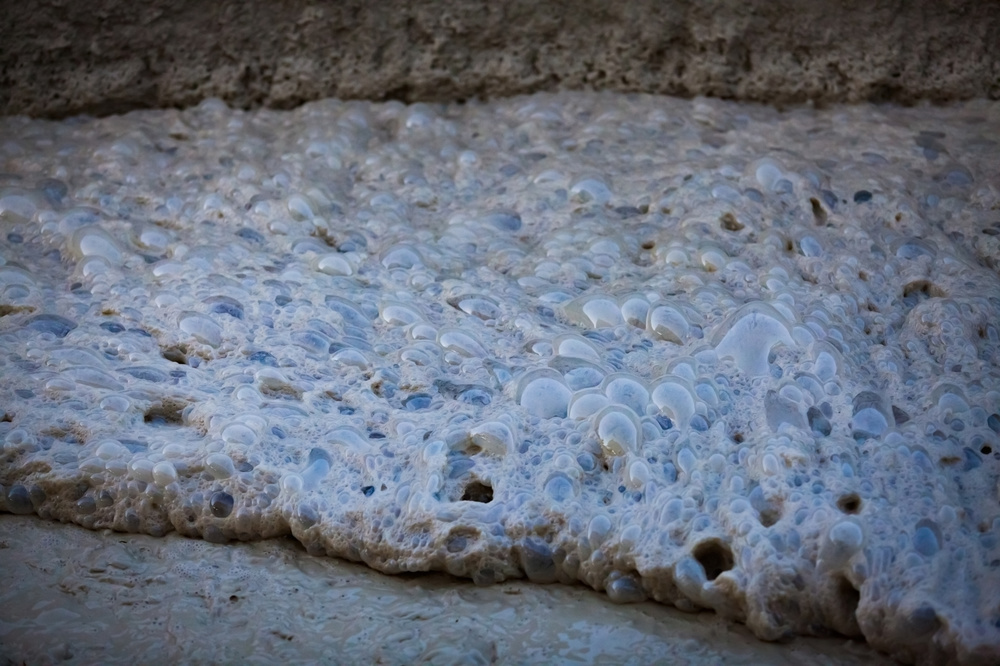
02 Applications of Flotation
Mineral processing is a production operation to prepare raw materials for metal smelting and chemical industries, and froth flotation has evolved into one of the most vital mineral processing techniques. Practically all types of mineral resources can be separated via flotation.
Currently, flotation is widely adopted for the beneficiation of ferrous metal ores dominated by iron and manganese, such as hematite, siderite and ilmenite; precious metal ores mainly containing gold and silver; non-ferrous metal ores including copper, lead, zinc, cobalt, nickel, molybdenum and antimony, covering sulfide minerals like galena, sphalerite, chalcopyrite, chalcocite and molybdenite, pentlandite, as well as oxide minerals such as malachite, cerussite, hemimorphite, cassiterite and wolframite. It is also applied in the separation of non-metallic salt minerals including fluorite, apatite and barite, soluble salt minerals like sylvite and rock salt, alongside non-metallic and silicate minerals such as coal, graphite, sulfur, diamond, quartz, mica, feldspar and beryl, spodumene.
Abundant practical experience has been accumulated and related technologies keep advancing in the mineral processing industry through flotation development. Low-grade and structurally complex minerals once deemed commercially valueless can now be recovered and reused as secondary resources by means of flotation.
As mineral resources are gradually becoming leaner, valuable minerals are distributed in finer and more complicated forms within ores, leading to growing separation difficulties. Meanwhile, to cut down production costs, industries including metallurgical materials and chemical engineering impose increasingly stringent requirements on the quality and precision of separated mineral concentrates used as processing feedstock.
Faced with the dual demands of improving concentrate quality and tackling the difficulty in separating finely sized minerals, flotation stands out with prominent advantages over alternative separation technologies and has become the most extensively applied and promising mineral processing method available. Initially applied only for sulfide mineral separation, flotation has been progressively extended to oxide minerals and non-metallic minerals, with billions of tons of minerals processed globally by flotation every year nowadays.
In recent decades, flotation technology has broken the boundary of mineral processing engineering and found expanding applications across environmental protection, metallurgy, papermaking, agriculture, chemical engineering, food production, material science, pharmaceuticals and biotechnology sectors.
Typical industrial applications include the recovery of valuable constituents from intermediate products, volatile substances and slags in pyrometallurgy via flotation; extraction of useful components from leaching residues and cementation precipitates of hydrometallurgy; deinking of waste paper and fiber recovery from pulping waste liquor within the chemical industry; as well as environmental engineering practices such as heavy crude extraction from riverbed sand, removal of fine solid contaminants, colloids, bacteria and trace metallic impurities from wastewater.
With continuous upgrades of flotation processes and the emergence of innovative high-efficiency flotation reagents and equipment, flotation will gain broader application across more industrial sectors. Nevertheless, drawbacks exist for flotation implementation: compared with magnetic separation and gravity separation, flotation consumes more chemical reagents and brings higher production costs; it imposes strict restrictions on feed particle size; numerous variables affect flotation performance and raise process control standards; wastewater carrying residual flotation reagents also poses environmental hazards.
03 Research Content of Flotation
The flotation process involves interactions between solid mineral particles and separation media (water and gas). Core research subjects cover fundamental flotation principles, flotation reagents, flotation machinery and flotation processes.
Fundamental flotation theories center on mineral floatability and interfacial characteristics during separation, including research on interfacial properties, interphase interactions and the mineralization mechanism of air bubbles. Research on flotation reagents focuses on reagent classification, molecular structure, physicochemical properties, functional mechanisms, preparation techniques and field application protocols. Studies on flotation machinery involve equipment configuration, working principles and applicable scenarios. Flotation process research covers process circuit layout, influence and regulation of technological parameters as well as reagent addition regimes, supplemented by practical application research for various ore types.
The theoretical framework of flotation research incorporates multiple disciplines such as process mineralogy, organic chemistry, inorganic chemistry, physical chemistry (interfacial chemistry and colloid chemistry), fluid mechanics, mechanical engineering, automatic detection technology and techno-economic analysis.
Post time: Jun-04-2026